
Masterpieces of world art: famous paintings, history, and value | Artatlas
Katsushika Hokusai, The Great Wave off Kanagawa

Catalog of iconic works

Masterpieces of World Art

This catalog is arranged as a large digital exhibition, moving from Renaissance icons to the defining images of twentieth-century modernism. Each work comes with a short history, museum context, an explanation of value, and cues for closer looking.

Search by era and creator

A large exhibition of famous works with history and museum context

Leonardo da Vinci, Mona Lisa

Mona Lisa

Leonardo da Vinci c. 1503-1506

Louvre, Paris

Stolen from the Louvre in 1911 — and it was the two-year manhunt that made her the most famous painting on earth.

Leonardo da Vinci began the Mona Lisa in Florence in the early sixteenth century and appears to have kept refining it for years, carrying the portrait with him as he adjusted its smoky transitions, hands, and famously elusive expression. That prolonged, almost meditative process is one reason the painting became one of the most studied and enigmatic images in art history.

Intro source: Wikipedia (EN)

More details
Sandro Botticelli, The Birth of Venus

The Birth of Venus

Sandro Botticelli c. 1484-1486

Uffizi Gallery, Florence

Botticelli painted this giant on canvas rather than a panel — light enough to move between the Medici villas.

Botticelli painted The Birth of Venus for the Medici milieu in Florence, joining classical myth, humanist poetry, and an unusually weightless figure in motion. The picture became a lasting emblem not only of beauty, but of the Renaissance ambition to reconcile nature, the body, and ideal harmony.

Intro source: Uffizi

More details
Claude Monet, Impression, Sunrise

Impression, Sunrise

Claude Monet 1872

Musee Marmottan Monet, Paris

The word 'Impressionism' was born as a sneer at this painting's title — and it was stolen in 1985, recovered only five years later.

Impression, Sunrise is an 1872 painting by Claude Monet first shown at what would become known as the "Exhibition of the Impressionists" in Paris in April, 1874. The painting is credited with inspiring the name of the Impressionist movement.

Intro source: Wikipedia (EN)

More details
Katsushika Hokusai, The Great Wave off Kanagawa
07 Ukiyo-e

The Great Wave off Kanagawa

Katsushika Hokusai c. 1831

The Met, New York

Those aren't fishermen under the wave — they're courier crews rushing live fish to the markets of Edo.

The Great Wave off Kanagawa is a woodblock print by the Japanese ukiyo-e artist Hokusai (1760–1849), created in late 1831 during the Edo period of Japanese history. The print depicts three boats moving through a storm-tossed sea, with a large, cresting wave forming a spiral in the centre over the boats and Mount Fuji in the background.

Intro source: Wikipedia (EN)

More details
Vincent van Gogh, The Starry Night

The Starry Night

Vincent van Gogh 1889

Museum of Modern Art, New York

Van Gogh painted it in the Saint-Rémy asylum — from his window, though the village below is invented.

The Starry Night, is an oil-on-canvas painting by the Dutch Post-Impressionist painter Vincent van Gogh. Painted in June 1889, it depicts the view from the east-facing window of his asylum room at Saint-Rémy-de-Provence, just before sunrise, with the addition of an imaginary village.

Intro source: Wikipedia (EN)

author: Beehivebaker · license: CC BY-SA 4.0 · Wikimedia Commons

More details
Gustav Klimt, The Kiss

The Kiss

Gustav Klimt 1907-1908

Belvedere, Vienna

Klimt used real gold leaf — and the lovers stand at the very edge of a flowering cliff, a single step from the abyss.

The Kiss is an oil-on-canvas painting with added gold leaf, silver and platinum by the Austrian Symbolist painter Gustav Klimt. It was painted at some point in 1907 and 1908, during the height of what scholars call his "Golden Period".

Intro source: Wikipedia (EN)

More details
Edvard Munch, The Scream

The Scream

Edvard Munch 1893

National Museum, Oslo

One version bears the scrawl 'could only have been painted by a madman' — and the handwriting turned out to be Munch's own.

The Scream is an art composition created by Norwegian artist Edvard Munch in 1893. The Norwegian name of the piece is Skrik ('Scream'), and the German title under which it was first exhibited is Der Schrei der Natur.

Intro source: Wikipedia (EN)

More details
Pablo Picasso, Guernica

Guernica

Pablo Picasso 1937

Museo Reina Sofia, Madrid

Picasso painted the near-25-foot canvas in 35 days — and banned it from Spain for as long as Franco lived.

Picasso painted Guernica in 1937 for the Spanish Pavilion at the Paris International Exposition after the bombing of the Basque town of Guernica. The vast monochrome canvas turned the horror of the Spanish Civil War into one of the defining anti-war images of the twentieth century.

Intro source: Wikipedia (EN)

More details
Grant Wood, American Gothic

American Gothic

Grant Wood 1930

Art Institute of Chicago, Chicago

They're father and daughter, not a married couple — the models were the artist's sister and his dentist.

American Gothic is a 1930 oil painting on beaverboard by the American Regionalist artist Grant Wood, depicting a Midwestern farmer and his wife or daughter standing in front of their Carpenter Gothic style home. It is one of the most famous American paintings of the 20th century and is frequently referenced in popular culture.

Intro source: Wikipedia (EN)

More details
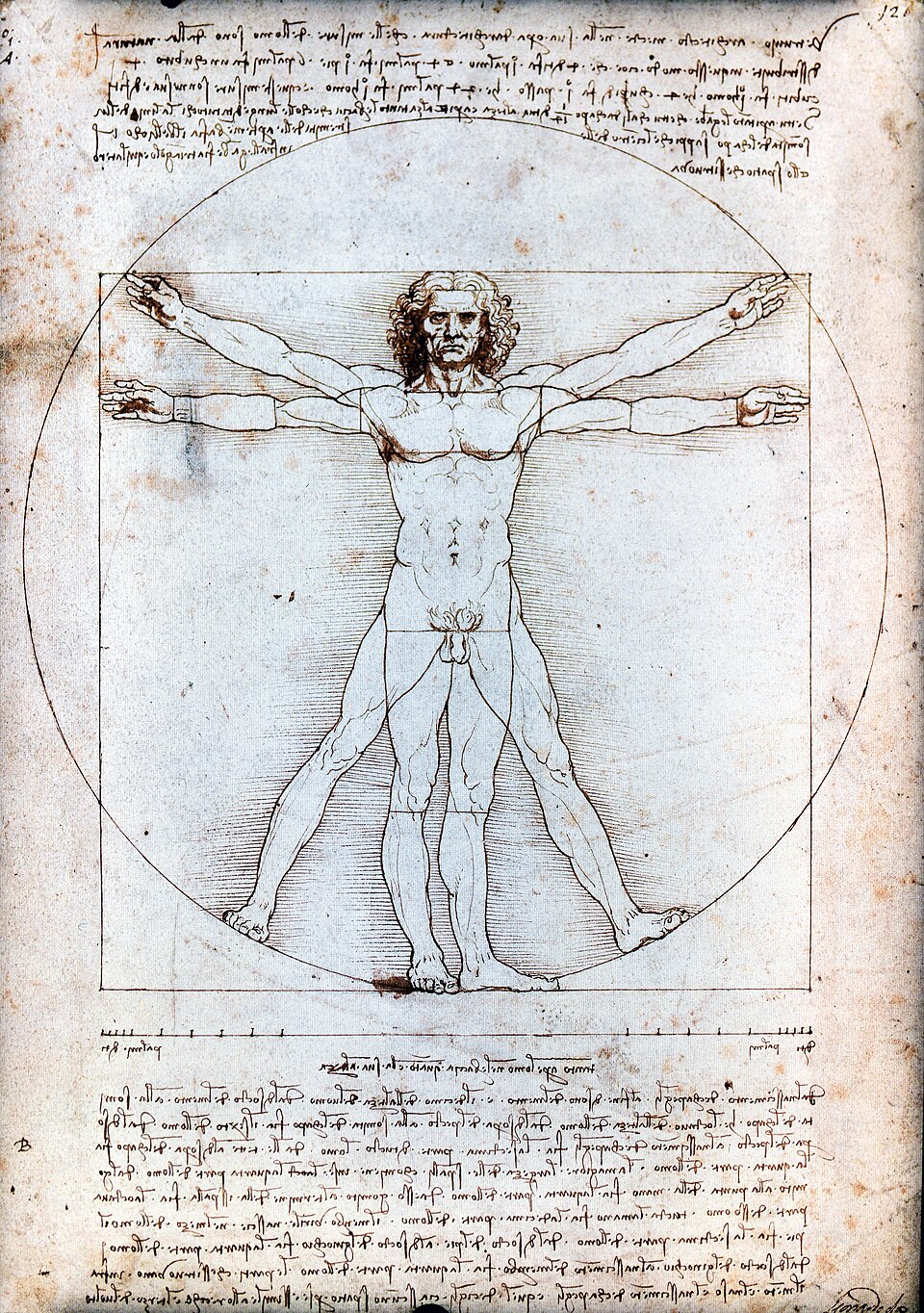
Leonardo da Vinci, Vitruvian Man

Vitruvian Man

Leonardo da Vinci c. 1490

Gallerie dell'Accademia, Venice

Italy blocked its 2019 loan to the Louvre — and it's actually two drawings overlaid, its margins filled in Leonardo's mirror writing.

Vitruvian Man is a drawing by the Italian Renaissance artist and scientist Leonardo da Vinci, dated to c. 1490. Inspired by the Roman architect Vitruvius, it depicts a nude man in two overlapping standing positions, inscribed within a circle and a square.

Intro source: Wikipedia (EN)

More details
Frida Kahlo, Self-Portrait with Thorn Necklace and Hummingbird

Self-Portrait with Thorn Necklace and Hummingbird

Frida Kahlo 1940

Harry Ransom Center, Austin

The dead hummingbird is a Mexican love charm — on Kahlo it hangs lifeless from a necklace of thorns.

Self-Portrait with Thorn Necklace and Hummingbird is a 1940 self-portrait by Mexican painter Frida Kahlo which also includes a black cat, a monkey, and two dragonflies. It was painted after Kahlo's divorce from Diego Rivera and the end of her affair with photographer Nickolas Muray.

Intro source: Wikipedia (EN)

More details
Frida Kahlo, The Broken Column

The Broken Column

Frida Kahlo 1944

Museo Dolores Olmedo, Mexico City

In place of her spine, a cracked classical column — Kahlo painted it after spinal surgery, wearing a steel corset for months.

The Broken Column is an oil on masonite painting by Mexican artist Frida Kahlo, painted in 1944 shortly after she had spinal surgery to correct on-going problems which had resulted from a serious traffic accident when she was 18 years old.

Intro source: Wikipedia (EN)

More details
Artist photo Marina Abramović, Rhythm 0

Rhythm 0

Marina Abramović 1974

Studio Morra, Naples

72 objects on the table — including a loaded gun; by the sixth hour a spectator had pressed it to Abramović's head.

Rhythm 0 is Marina Abramović's 1974 performance in which she stood motionless for six hours beside 72 objects and allowed the public to use them on her as they wished. It became a brutal lesson in spectatorship, bodily vulnerability, and how quickly collective freedom can turn into violence.

Intro source: Wikipedia (EN)

Instead of performance documentation, the site shows a public portrait of the artist from Wikimedia Commons (context and educational use).

author: StagiaireMGIMO · license: CC BY-SA 4.0 · Wikimedia Commons

More details
Marina Abramović, The Artist Is Present

The Artist Is Present

Marina Abramović 2010

Museum of Modern Art, New York

Abramović sat for 736 hours over three months — then her ex Ulay appeared unannounced, sat down across from her, and both wept.

In 2010, at MoMA, Marina Abramović spent nearly three months sitting silently at a table and inviting visitors to meet her gaze one by one. The performance turned simple presence into an emotionally charged event and became one of the most discussed museum works of the twenty-first century.

Intro source: MoMA

author: Andrew Russeth · license: CC BY-SA 2.0 · Wikimedia Commons

More details
Artist photo Marina Abramović, Balkan Baroque

Balkan Baroque

Marina Abramović 1997

Venice Biennale, Venice

Abramović scrubbed 1,500 bloody cow bones six hours a day for four days — and won the Golden Lion.

Balkan Baroque is Marina Abramović's 1997 performance about the victims of the wars in former Yugoslavia. For four days she sat for hours on a heap of bloodied cow bones, scrubbing them while singing and speaking, turning the impossibility of cleansing into an image of collective grief and memory.

Intro source: Wikipedia (EN)

Instead of performance documentation, the site shows a public portrait of the artist from Wikimedia Commons (context and educational use).

author: StagiaireMGIMO · license: CC BY-SA 4.0 · Wikimedia Commons

More details
Pythokritos, Winged Victory of Samothrace

Winged Victory of Samothrace

Pythokritos c. 175 BCE

Louvre, Paris

Headless and armless, found in hundreds of pieces — the goddess stands on a warship's prow, marble seeming to meet the sea wind.

The Winged Victory of Samothrace, or the Nike of Samothrace, is a votive monument originally discovered on the island of Samothrace in the northeastern Aegean Sea. It is a masterpiece of Greek sculpture from the Hellenistic era, dating from the beginning of the 2nd century BC.

Intro source: Wikipedia (EN)

More details
Jan van Eyck, Ghent Altarpiece

Ghent Altarpiece

Jan van Eyck 1432

St Bavo's Cathedral, Ghent

The most-stolen artwork in history — a panel taken in 1934 is still missing, and the Nazis nearly blew it up in a salt mine.

The Ghent Altarpiece, also called the Adoration of the Mystic Lamb, is a very large and complex 15th-century polyptych altarpiece in St Bavo's Cathedral, Ghent, Belgium. It was begun around the mid-1420s and completed by 1432, and it is attributed to the Early Netherlandish painters and brothers Hubert and Jan van Eyck.

Intro source: Wikipedia (EN)

More details
Leonardo da Vinci, Lady with an Ermine

Lady with an Ermine

Leonardo da Vinci 1490

Czartoryski Museum, Krakow

X-rays reveal there was no ermine at first — Leonardo added it later — and the black background hides a door behind her.

The Lady with an Ermine is a portrait painting by the Italian Renaissance artist Leonardo da Vinci. Dated to c. 1489–1491, the work is painted in oils on a panel of walnut wood. Its subject is Cecilia Gallerani, a mistress of Ludovico Sforza, Duke of Milan; Leonardo was painter to the Sforza court in Milan at the time of its execution.

Intro source: Wikipedia (EN)

More details
Michelangelo, The Creation of Adam

The Creation of Adam

Michelangelo 1511

Sistine Chapel, Vatican City

Many doctors see a cross-section of the human brain outlined around God — and the fingers of God and Adam never actually touch.

The Creation of Adam, also known as The Creation of Man, is a fresco painting by Italian artist Michelangelo, which forms part of the Sistine Chapel's ceiling, painted 1508–1512. It illustrates the Biblical creation narrative from the Book of Genesis in which God gives life to Adam, the first man.

Intro source: Wikipedia (EN)

More details
Hieronymus Bosch, The Garden of Earthly Delights

The Garden of Earthly Delights

Hieronymus Bosch 1490

Museo del Prado, Madrid

One damned soul has musical notes inked across his backside — fans have since transcribed and played the 'song from hell'.

The Garden of Earthly Delights is the modern title given to a five-panel triptych by the Early Netherlandish master Hieronymus Bosch, between 1490 and 1510, when Bosch was between 40 and 60 years old. Because of Bosch's religious beliefs, interpretations of the work typically assume it is a warning against the perils of temptation.

Intro source: Wikipedia (EN)

More details
Raphael, The School of Athens

The School of Athens

Raphael 1512

Apostolic Palace, Vatican City

The philosophers wear his contemporaries' faces — Plato is Leonardo, the brooding Heraclitus is Michelangelo — and Raphael was just 26.

The School of Athens is a fresco by the Italian Renaissance artist Raphael. It was painted between 1509 and 1511 as part of a commission by Pope Julius II to decorate the rooms now called the Stanze di Raffaello in the Apostolic Palace in Vatican City.

Intro source: Wikipedia (EN)

More details
Titian, Venus of Urbino

Venus of Urbino

Titian 1538

Uffizi Gallery, Florence

Mark Twain called it 'the foulest, the vilest, the obscenest picture the world possesses' — undone by her frank, unashamed stare.

The Venus of Urbino is an oil painting by Italian painter Titian, depicting a nude young woman, traditionally identified with the goddess Venus, reclining on a couch or bed in the sumptuous surroundings of a Renaissance palace.

Intro source: Wikipedia (EN)

More details
Gian Lorenzo Bernini, Ecstasy of Saint Teresa
45 Baroque

Ecstasy of Saint Teresa

Gian Lorenzo Bernini 1647

Santa Maria della Vittoria, Rome

Bernini staged the whole chapel like a theater — light pours from a hidden window while marble spectators watch from opera boxes.

The Ecstasy of Saint Teresa is a sculptural altarpiece group in white marble set in an elevated aedicule in the Cornaro Chapel of the church of Santa Maria della Vittoria in Rome. It was designed and carved by Gian Lorenzo Bernini, the leading sculptor of his day, who also designed the setting of the chapel in marble, stucco and paint.

Intro source: Wikipedia (EN)

More details
Diego Velázquez, Las Hilanderas
47 Baroque

Las Hilanderas

Diego Velazquez 1655

Museo del Prado, Madrid

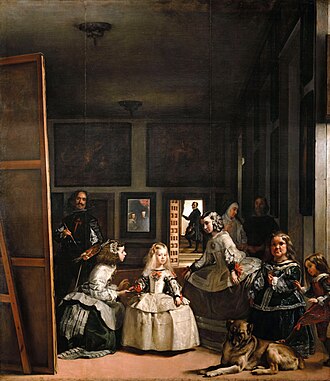
For ages it read as a mere tapestry workshop — until scholars spotted the myth of Arachne, who dared challenge a goddess.

Las Hilanderas is a painting by the Spanish painter Diego Velázquez, in the Museo del Prado of Madrid, Spain. It is also known by the title The Fable of Arachne. Most scholars regard it as a late work by the artist, dating from 1657 to 1658, but some argue that it was done c.

Intro source: Wikipedia (EN)

More details
Rembrandt, The Anatomy Lesson of Dr. Nicolaes Tulp
48 Baroque

The Anatomy Lesson of Dr. Nicolaes Tulp

Rembrandt 1632

Mauritshuis, The Hague

Rembrandt was 26 — the corpse is a thief hanged that morning, and the dissected arm is 'wrong', copied from a textbook rather than the body.

The Anatomy Lesson of Dr. Nicolaes Tulp is a 1632 oil painting on canvas by Rembrandt housed in the Mauritshuis museum in The Hague, Netherlands. It was originally created to be displayed by the Surgeons Guild in their meeting room.

Intro source: Wikipedia (EN)

More details
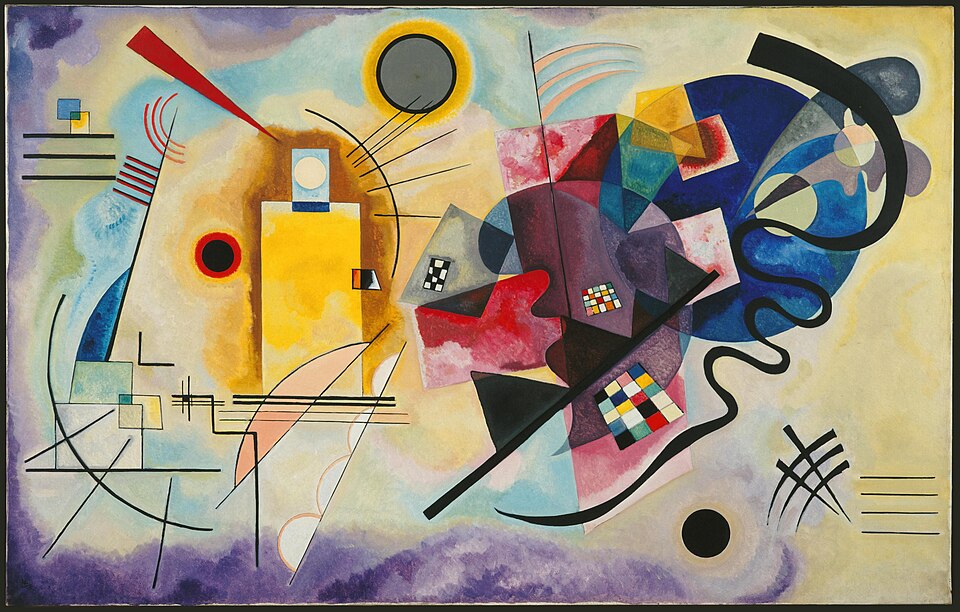
Johannes Vermeer, The Art of Painting
49 Baroque

The Art of Painting

Johannes Vermeer 1667

Kunsthistorisches Museum, Vienna

Vermeer refused to sell it even while drowning in debt — and Hitler later seized it for a museum he never built.

The Art of Painting, also known as The Allegory of Painting, or Painter in his Studio, is a 17th-century oil on canvas painting by Dutch painter Johannes Vermeer. It is owned by the Austrian Republic and is on display in the Kunsthistorisches Museum in Vienna.

Intro source: Wikipedia (EN)

More details

Caravaggio, The Calling of Saint Matthew
50 Baroque

The Calling of Saint Matthew

Caravaggio 1609

San Luigi dei Francesi, Rome

The shaft of light traces Christ's hand — which in turn quotes Adam's from Michelangelo's ceiling.

The Calling of Saint Matthew is an oil painting by the Italian Baroque master Caravaggio that depicts the moment Jesus Christ calls on the tax collector Matthew to follow him. It was completed in 1599–1600 for the Contarelli Chapel in the church of the French congregation, San Luigi dei Francesi in Rome, where it remains.

Intro source: Wikipedia (EN)

More details
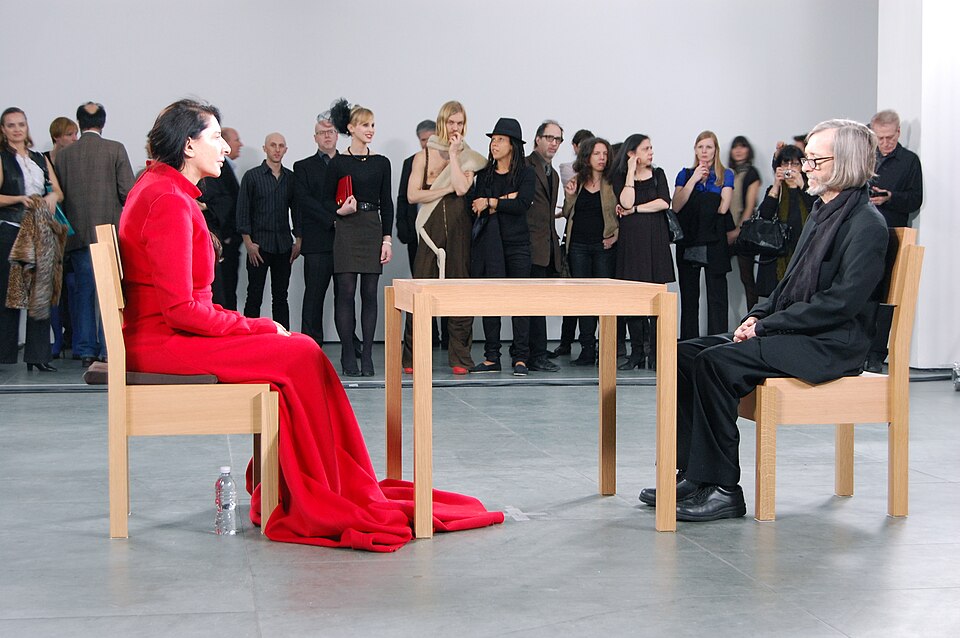
Rembrandt, The Night Watch
54 Baroque

The Night Watch

Rembrandt 1642

Rijksmuseum, Amsterdam

It isn't a night scene at all — the varnish darkened — and in 1715 it was trimmed to fit a doorway, cutting two figures off the left.

Militia Company of District II under the Command of Captain Frans Banninck Cocq, also known as The Shooting Company of Frans Banning Cocq and Willem van Ruytenburch, but commonly referred to as The Night Watch, is a 1642 painting by Rembrandt van Rijn.

Intro source: Wikipedia (EN)

More details
Johannes Vermeer, View of Delft
55 Baroque

View of Delft

Johannes Vermeer 1661

Mauritshuis, The Hague

Proust called it the most beautiful painting in the world — and, gravely ill, dragged himself from his sickbed to see it, collapsing afterward.

View of Delft is an oil painting by Johannes Vermeer, painted c. 1659–1661. The painting of the Dutch artist's hometown is among his best known. It is one of three known paintings of Delft by Vermeer, along with The Little Street and the lost painting House Standing in Delft, and his only cityscape.

Intro source: Wikipedia (EN)

More details
Jean-Honoré Fragonard, The Swing
56 Rococo

The Swing

Jean-Honoré Fragonard 1767

Wallace Collection, London

A lover hides in the bushes peeking up her skirt while her unwitting husband pushes the swing — and her flying shoe hints at lost innocence.

The Swing may refer to:The Swing (Fragonard), oil painting by Jean-Honoré Fragonard, 1767 The Swing (Renoir), oil painting by Pierre-Auguste Renoir, 1876 The Swing (Goya), a tapestry cartoon designed by Francisco de Goya The Swing, 1984, also its title track, 1984 "The Swing" (song), a song recorded by James Bonamy, 1997 "The Swing", a…

Intro source: Wikipedia (EN)

More details
Jacques-Louis David, The Oath of the Horatii

The Oath of the Horatii

Jacques-Louis David 1784

Louvre, Paris

A royal commission that turned into a republican rallying cry — the king had essentially funded his own propaganda nightmare.

Oath of the Horatii is a large painting by the French artist Jacques-Louis David painted in 1784 and 1785 and now on display in the Louvre in Paris. The painting immediately became a huge success with critics and the public and remains one of the best-known paintings in the Neoclassical style.

Intro source: Wikipedia (EN)

More details
Francisco Goya, Charles IV of Spain and His Family

Charles IV of Spain and His Family

Francisco Goya 1800

Museo del Prado, Madrid

It's the queen, not the king, at the center — many think she really ruled — while Goya lurks in shadow, echoing Velázquez.

Charles IV of Spain and His Family is an oil-on-canvas group portrait painting by the Spanish artist Francisco Goya. He began work on the painting in 1800, shortly after he became First Chamber Painter to the royal family, and completed it in the summer of 1801.

Intro source: Wikipedia (EN)

More details
Francisco Goya, Saturn Devouring His Son

Saturn Devouring His Son

Francisco Goya 1819

Museo del Prado, Madrid

Goya painted this straight onto the wall of his own house — a private nightmare he never meant anyone to see.

Saturn Devouring His Son is a painting by Spanish artist Francisco Goya. The work is one of the 14 so-called Black Paintings that Goya painted directly on the walls of his house some time between 1820 and 1823. It was transferred to canvas after Goya's death and is now in the Museo del Prado in Madrid.

Intro source: Wikipedia (EN)

More details
John Constable, The Hay Wain

The Hay Wain

John Constable 1821

National Gallery, London

Ignored in England, it stunned Paris and won gold at the 1824 Salon — where the French mocked its white flecks as 'Constable's snow'.

The Hay Wain – originally titled Landscape: Noon – is a painting by John Constable, completed in 1821, which depicts a rural scene on the River Stour between the English counties of Suffolk and Essex.

Intro source: Wikipedia (EN)

More details
Henry Fuseli, The Nightmare

The Nightmare

Henry Fuseli 1781

Detroit Institute of Arts, Detroit

An incubus squats on the sleeper's chest, a pale-eyed mare pushing through the curtain — and Freud reputedly kept a print of it in his office.

The Nightmare is a 1781 oil painting by the Swiss artist Henry Fuseli. It shows a woman with her arms thrown below her, in deep sleep as she undergoes a nightmare as an almost hidden horse looks on as a demonic and ape-like incubus crouches on her chest.

Intro source: Wikipedia (EN)

More details
Théodore Géricault, The Raft of the Medusa

The Raft of the Medusa

Théodore Géricault 1818

Louvre, Paris

Based on a real wreck where survivors turned to cannibalism — Géricault studied corpses in the morgue and kept severed limbs in his studio for accuracy.

The Raft of the Medusa – originally titled Scène de Naufrage – is an oil painting of 1818–1819 by the French Romantic painter and lithographer Théodore Géricault (1791–1824). Completed when the artist was 27, the work has become an icon of French Romanticism.

Intro source: Wikipedia (EN)

More details
J. M. W. Turner, The Slave Ship

The Slave Ship

J. M. W. Turner 1840

Museum of Fine Arts, Boston

Based on the real Zong atrocity — sick slaves thrown overboard for insurance — the critic Ruskin owned it but sold it, unable to live with the horror.

The Slave Ship, originally titled Slavers Throwing overboard the Dead and Dying—Typhon coming on, is a painting by the British artist J. M. W. Turner, first exhibited at The Royal Academy of Arts in 1840.

Intro source: Wikipedia (EN)

More details
Francisco Goya, The Third of May 1808

The Third of May 1808

Francisco Goya 1814

Museo del Prado, Madrid

The man in white flings his arms wide like a crucified Christ — a stigmata wound on his palm — while the firing squad is a faceless wall of backs.

The Third of May 1808 in Madrid and also known, in Spanish, as El tres de mayo de 1808 en Madrid or Los fusilamientos de la montaña del Príncipe Pío, or Los fusilamientos del tres de mayo, is a painting completed in 1814 by the Spanish painter Francisco Goya, now in the Museo del Prado, Madrid.

Intro source: Wikipedia (EN)

More details
Gustave Courbet, A Burial at Ornans
73 Realism

A Burial at Ornans

Gustave Courbet 1846

Musee d'Orsay, Paris

Courbet gave the scale reserved for coronations and battles to an ordinary village funeral — the Salon took it as an insult.

A Burial at Ornans is a painting of 1849–50 by Gustave Courbet. It is widely regarded as a major turning point in 19th-century French art. The painting records a funeral in Courbet's birthplace, the small town of Ornans.

Intro source: Wikipedia (EN)

More details
Édouard Manet, Olympia
76 Realism

Olympia

Édouard Manet 1863

Musee d'Orsay, Paris

It was hung near the ceiling so outraged viewers couldn't jab it with umbrellas — she stares straight back, with no mythological alibi.

Olympia reads as one of the anchor works of realism, where Édouard Manet's visual voice becomes unmistakable.

More details
Édouard Manet, The Fif
78 Realism

The Fif

Édouard Manet 1866

Musee d'Orsay, Paris

The Salon rejected The Fifer in 1866 — the boy stands in a flat grey void 'like a playing-card figure' — and Zola rose to Manet's defense.

The Fifer or Young Flautist is a painting by French painter Édouard Manet, made in 1866. It is usually kept in the Musée d'Orsay, Paris.

Intro source: Wikipedia (EN)

More details
James McNeill Whistler, Whistler's Mother
82 Realism

Whistler's Mother

James McNeill Whistler 1871

Musee d'Orsay, Paris

Its real title is 'Arrangement in Grey and Black' — and his mother sat only because, by legend, the booked model failed to show.

Arrangement in Grey and Black No. 1, best known under its colloquial name Whistler's Mother or Portrait of Artist's Mother, is a painting in oils on canvas created by the American-born painter James McNeill Whistler in 1871.

Intro source: Wikipedia (EN)

More details
Pierre-Auguste Renoir, Luncheon of the Boating Party

Luncheon of the Boating Party

Pierre-Auguste Renoir 1880

The Phillips Collection, Washington, D.C.

The girl with the little dog is Aline, Renoir's future wife — and nearly every face in the crowd is a named friend.

Luncheon of the Boating Party is an 1881 painting by French impressionist Pierre-Auguste Renoir. Exhibited at the Seventh Impressionist Exhibition in 1882, it was identified as the best painting in the show by three critics.

Intro source: Wikipedia (EN)

More details
Georges Seurat, A Sunday Afternoon on the Island of La Grande Jatte

A Sunday Afternoon on the Island of La Grande Jatte

Georges Seurat 1884

Art Institute of Chicago, Chicago

The lady at right walks a monkey on a leash — to 1880s Parisians that was a dirty pun, not a fashion note.

A Sunday Afternoon on the Island of La Grande Jatte was painted from 1884 to 1886 and is Georges Seurat's most famous work. It is recognised as a leading example of pointillist technique and as a founding work of the neo-impressionist movement.

Intro source: Wikipedia (EN)

More details
Vincent van Gogh, Starry Night Over the Rhone

Starry Night Over the Rhone

Vincent van Gogh 1888

Musee d'Orsay, Paris

Not the swirling Starry Night of the postcards (that's in New York) — here a tiny couple strolls beneath the stars, a quiet love note.

Starry Night, commonly known as Starry Night Over the Rhône, is one of Vincent van Gogh's paintings of Arles at night. It was painted on the bank of the Rhône that was only a one or two-minute walk from the Yellow House on the Place Lamartine, which van Gogh was renting at the time.

Intro source: Wikipedia (EN)

More details
Paul Cézanne, The Card Players

The Card Players

Paul Cézanne 1893

Musee d'Orsay, Paris

One version sold to Qatar for around $250 million — for a time the most expensive painting ever.

The Card Players is a series of oil paintings by the French Post-Impressionist artist Paul Cézanne. Painted during Cézanne's final period in the early 1890s, there are five paintings in the series. The versions vary in size, the number of players, and the setting in which the game takes place.

Intro source: Wikipedia (EN)

More details
Vincent van Gogh, The Night Café

The Night Café

Vincent van Gogh 1888

Yale University Art Gallery, New Haven

Van Gogh painted it over three straight nights — out to show 'a place where you can ruin yourself, go mad, or commit a crime'.

The Night Café is an oil painting created by Dutch artist Vincent van Gogh in September 1888 in Arles. Its title is inscribed lower right beneath the signature. The painting is owned by Yale University and is currently held at the Yale University Art Gallery in New Haven, Connecticut.

Intro source: Wikipedia (EN)

More details
Paul Gauguin, Vision After the Sermon

Vision After the Sermon

Paul Gauguin 1888

National Galleries of Scotland, Edinburgh

Gauguin painted the ground bright red to convey the peasant women's vision — and the local priest refused the 'strange' painting as a gift.

Vision after the Sermon (Jacob Wrestling with the Angel) is an oil painting by French artist Paul Gauguin, completed in 1888. It is now in the Scottish National Gallery, Edinburgh. It depicts a scene from the Bible in which Jacob wrestles an angel.

Intro source: Wikipedia (EN)

More details
Paul Gauguin, Where Do We Come From? What Are We? Where Are We Going?

Where Do We Come From? What Are We? Where Are We Going?

Paul Gauguin 1897

Museum of Fine Arts, Boston

Gauguin's 'testament', painted in a fevered burst on Tahiti — afterward he says he tried to kill himself with arsenic; read it right to left.

Where Do We Come From? What Are We? Where Are We Going? is an 1897–98 painting by French artist Paul Gauguin. The painting was created in Tahiti and is in the Museum of Fine Arts in Boston, Massachusetts. Viewed as a masterpiece by Gauguin, the painting is considered "a philosophical work comparable to the themes of the Gospels".

Intro source: Wikipedia (EN)

More details
Henri Rousseau, The Sleeping Gypsy
108 Symbolism

The Sleeping Gypsy

Henri Rousseau 1897

Museum of Modern Art, New York

A lion sniffs the sleeper yet doesn't attack — and the self-taught customs clerk, mocked as naive, was later hailed by the Surrealists as their forefather.

The Sleeping Gypsy is an 1897 oil on canvas painting by the French Naïve artist Henri Rousseau (1844–1910). It is a fantastical depiction of a lion musing over a sleeping woman on a moonlit night. It is held by the Museum of Modern Art in New York City, to which it was donated by Olga Guggenheim in 1939.

Intro source: Wikipedia (EN)

More details
Michelangelo, Pietà (Michelangelo)

Pietà (Michelangelo)

Michelangelo 1499

St. Peter's Basilica, Vatican City

Michelangelo's only signed work — he carved his name on Mary's sash after hearing the Pietà credited to another sculptor.

The Pietà is a Carrara marble sculpture of Jesus and Mary at Mount Golgotha representing the "Sixth Sorrow" of the Virgin Mary by Michelangelo Buonarroti, in Saint Peter's Basilica, Vatican City, for which it was made. It is a key work of Italian Renaissance sculpture and often taken as the start of the High Renaissance.

Intro source: Wikipedia (EN)

More details
Auguste Rodin, The Thinker

The Thinker

Auguste Rodin 1882

Musee Rodin, Paris

The Thinker began as Dante brooding atop the Gates of Hell — and a Cleveland cast, bombed in 1970, is still shown with its mangled base.

The Thinker, by Auguste Rodin, is a bronze sculpture depicting a nude male figure of heroic size, seated on a large rock, leaning forward, his right elbow placed upon his left thigh, with the back of his right hand supporting his chin in a posture evocative of deep thought and contemplation.

Intro source: Wikipedia (EN)

More details
Umberto Boccioni, Unique Forms of Continuity in Space

Unique Forms of Continuity in Space

Umberto Boccioni 1913

Museum of Modern Art, New York

Boccioni never saw it in bronze — he modeled the figure in plaster in 1913 and died in 1916, before a single cast was made.

Unique Forms of Continuity in Space is a 1913 bronze Futurist sculpture by Umberto Boccioni. It is seen as an expression of movement and fluidity. The sculpture is depicted on the obverse of the Italian-issue 20 cent euro coin.

Intro source: Wikipedia (EN)

More details
Katsushika Hokusai, Fine Wind, Clear Morning

Fine Wind, Clear Morning

Katsushika Hokusai 1830

Yamanashi Prefectural Museum, Yamanashi

'Red Fuji' isn't a sunset — the slopes really warm to red for just a few late-summer mornings, and Hokusai caught it.

Fine Wind, Clear Morning, also known as Red Fuji, is a woodblock print by Japanese artist Hokusai (1760–1849), part of his Thirty-six Views of Mount Fuji series, dating from c. 1830 to 1832. The work has been described as "one of the simplest and at the same time one of the most outstanding of all Japanese prints".

Intro source: Wikipedia (EN)

More details
Andy Warhol, Marilyn Diptych
129 Pop Art

Marilyn Diptych

Andy Warhol 1962

Tate, London

Warhol silkscreened a single Monroe publicity still — the right half fading to black-and-white, life dissolving into death.

Andy Warhol's Marilyn Diptych turns a movie star's face into an endlessly reproduced product — a pop-art icon about fame, death and mass culture.

Source: Wikipedia

More details
Roy Lichtenstein, Whaam!
133 Pop Art

Whaam!

Roy Lichtenstein 1963

Tate, London

Lichtenstein blew up a 1962 DC war-comic panel to two metres wide — Ben-Day printing dots and all, done by hand.

Roy Lichtenstein's Whaam! — an explosion from a war comic blown up across two huge canvases: high art speaking the language of mass printing.

Source: Wikipedia

More details
Berthe Morisot, The Cradle

The Cradle

Berthe Morisot 1872

Musée d'Orsay, Paris

The model is her sister Edma, who gave up painting for family — and Morisot was one of only three women at the Impressionist core.

Berthe Morisot's The Cradle — the artist's sister gazing thoughtfully at a sleeping baby through a sheer veil: the first Impressionist masterpiece of motherhood.

Source: Wikipedia

More details
William Blake, Newton

Newton

William Blake 1795-1805

Tate, London

To Blake, Newton was the villain — cold reason hunched on the sea floor, blind to the stars overhead.

William Blake's Newton — a nude scientist bent over a compass on the sea floor: a brilliant critique of cold reason that has turned its back on imagination.

Source: Wikipedia

More details
Alexandros of Antioch, Venus de Milo
178 Antiquity

Venus de Milo

Alexandros of Antioch ок. 130-100 до н.э.

Louvre, Paris

A farmer dug her up on Milos in 1820 — her lost arms have never been found, and her sculptor's name came from a base fragment that was later lost too.

The Venus de Milo is a Hellenistic statue of the goddess of love, found on the Greek island of Milos in 1820, already missing its arms. Now in the Louvre.

Intro source: Wikipedia (EN)

More
Yayoi Kusama, Pumpkin

Pumpkin

Yayoi Kusama 1990-е — наст. время

various sites and collections

For Kusama the pumpkin is a self-portrait and a comfort against lifelong hallucinations — she has lived by choice in a psychiatric hospital since 1977.

Pumpkin is Yayoi Kusama's sculptural self-portrait, covered in her signature polka dots — one of contemporary art's most recognisable images.

Intro source: Wikipedia (EN)

More

Next routes

After the catalog, move naturally to eras, creators, and news

This keeps the experience of art from falling into isolated names: each work can immediately be linked to history, biography, and the contemporary context around it.