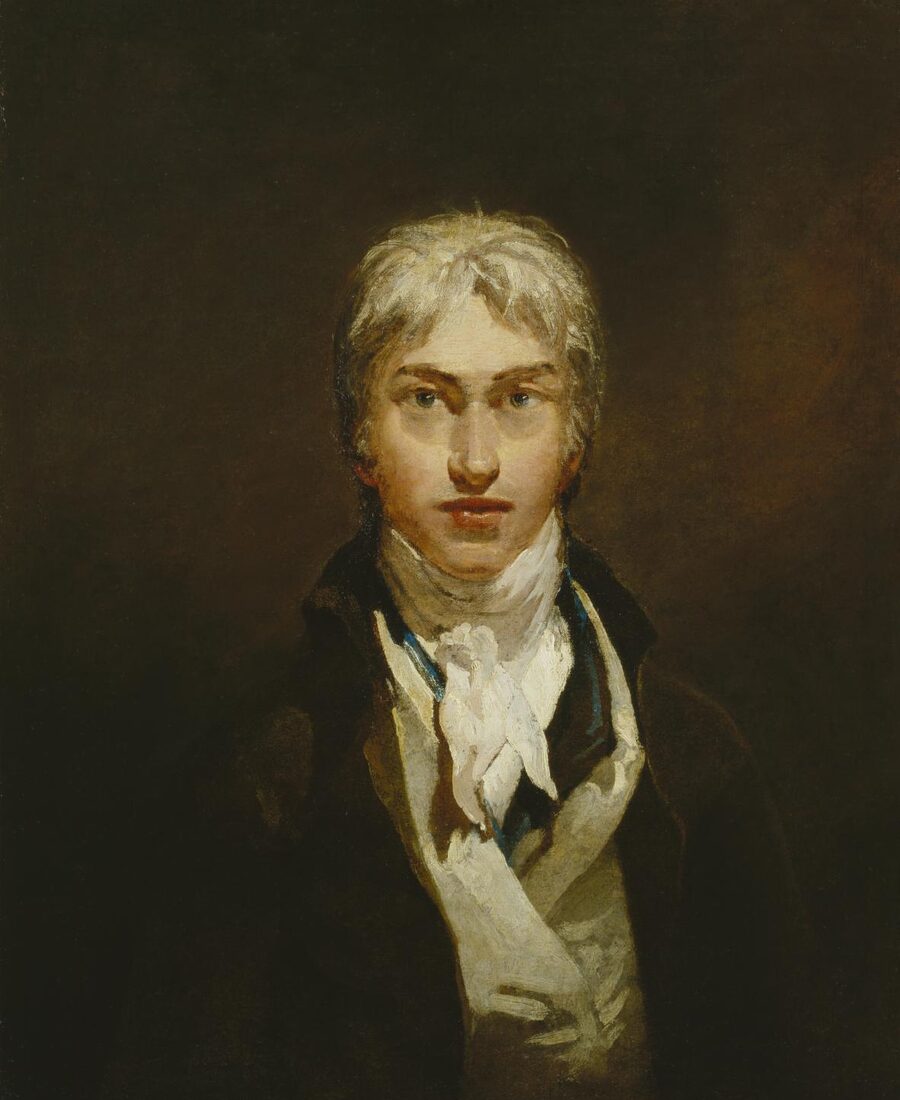
Intro source: Wikipedia (EN)
Author
J. M. W. Turner
Movement / period
Romanticism
Medium
painting
Location
National Gallery, London
The actual Temeraire was a 98-gun warship that helped break the Franco-Spanish line at Trafalgar in 1805, fighting so ferociously she captured two enemy ships in a single engagement.

Highlights
Facts & legends
- Turner witnessed the Temeraire's final journey himself in 1838 — he was on a steamboat passing the tow on the Thames and reportedly sketched the scene on the spot.
- The actual Temeraire was a 98-gun warship that helped break the Franco-Spanish line at Trafalgar in 1805, fighting so ferociously she captured two enemy ships in a single engagement.
- When the painting was exhibited at the Royal Academy in 1839, the critic William Makepeace Thackeray (yes, the Vanity Fair author) called it "as grand a painting as ever figured on the walls of any academy."
- Turner refused every offer to sell the painting during his lifetime, reportedly calling it "my darling" — he left it to the British nation in his will, and it's been at the National Gallery ever since 1856.
- The sun sets in the wrong direction: Turner placed the sunset in the east rather than the west, a deliberate compositional choice that has puzzled and fascinated art historians for 180 years.
- In a 2005 public poll run by BBC Radio 4, The Fighting Temeraire was voted the greatest painting in Britain — beating Constable, Hogarth, and everyone else.
Estimated value
What it is worth today
The Fighting Temeraire is in London's National Gallery and not for sale; Britons vote it their favourite painting, and its image appears on the £20 note.
More details How a Trafalgar veteran became a pale ghost, why Turner invented the sunset and altered the tow, and how one picture mourns sail while acknowledging steam.
Trafalgar heroine
A real war record
The 98-gun Temeraire fought beside Nelson in 1805; thirty-three years later it was sold and towed to Rotherhithe for breaking.
Turner painted a national hero's last journey, not its battle.
At Trafalgar, Temeraire sailed second in Nelson's column behind Victory. When the French Redoutable became locked with the flagship, Temeraire came up on the other side and entered an exceptionally close fight. That later fame explains why an ordinary tow to a breaker’s yard could read to British viewers as a veteran's funeral. Turner depicts not a generic old ship but a recognised participant in national history.
Not an eyewitness
Accuracy yields to symbol
Turner probably reconstructed the scene from reports. He restored masts already removed and arranged river, sun and tow for meaning.
The old ship becomes larger, paler and more ghostlike than reality.
He even altered the silhouette. By 1838 the vessel had lost much of its rigging and equipment, so the real hulk looked poorer. Turner restores three masts while withholding sails and flag. This mixture of recovered grandeur and obvious helplessness conveys memory better than an inventory could. The painting does not hide invention; it turns a reported event into the form in which the public might remember it.
The small tug wins
Steam is ugly but active
A black, smoking machine pulls the magnificent powerless giant.
Turner mourns sail without pretending technological change can be reversed.
The technological contrast is made in paint. The pale ship is laid in thin silvery passages and nearly dissolves into sky; the tug is built from dense black and orange. Its smoke blows toward the veteran as if the new age were soiling its own monument. Yet the little paddle wheels churn the water while the giant cannot move itself. Progress is not a slogan here but a physical dependence.
Invented sunset
Scrapping becomes historical death
Cold light surrounds the ship while a red sun sinks opposite. Day and maritime age end together.
A commercial tow becomes a ritual farewell.
Geography exposes the staging. A vessel travelling upriver to Rotherhithe could not have the setting sun where Turner placed it, a point already debated by contemporaries. Moon at left and sun at right create an almost theatrical balance. Compass gives way to historical time: the cool ship approaches dusk, the fiery sky closes its age, and the black tug already belongs to industry’s coming night.
Bequeathed to the nation
Memory rather than merchandise
Turner kept the painting and it entered the national collection through his 1856 bequest.
Its contradictions made private imagination into public memory.
Royal Academy viewers in 1839 immediately read the canvas as poetic and patriotic. Turner refused offers and called it his 'Darling'; after his death it entered the bequest to the nation. Its preservation is another quiet surprise. The National Gallery notes a comparatively standard oil mixture, unlike some unstable experiments, so the ship's cold light still contests the copper sunset with unusual clarity.
Official sources
Where to check
- The Fighting Temeraire: object record and in-depth accountNational Gallery, London
- Catalogue entry, provenance, and receptionNational Gallery, London
- Heroine of Trafalgar: history and artistic licenceNational Gallery, London
- Materials and preservationNational Gallery, London
- The Battle of TrafalgarRoyal Museums Greenwich
- J. M. W. Turner: artist recordTate
Visual context