
From the artist's life
Under the preacher Savonarola's influence, Botticelli is said to have thrown some of his own pagan paintings onto the Bonfire of the Vanities.
Source: Wikipedia / WikimediaEarly Renaissance
Sandro Botticelli (c. 1445–1510) was the Florentine painter behind The Birth of Venus and Primavera, made for the Medici circle. After his death he was largely forgotten and only rediscovered in the 19th century.
Forgotten for centuries, Botticelli was revived by the Pre-Raphaelites and is now among the most beloved painters of the Renaissance.
Under the preacher Savonarola's influence, Botticelli is said to have thrown some of his own pagan paintings onto the Bonfire of the Vanities.
Source: Wikipedia / Wikimedia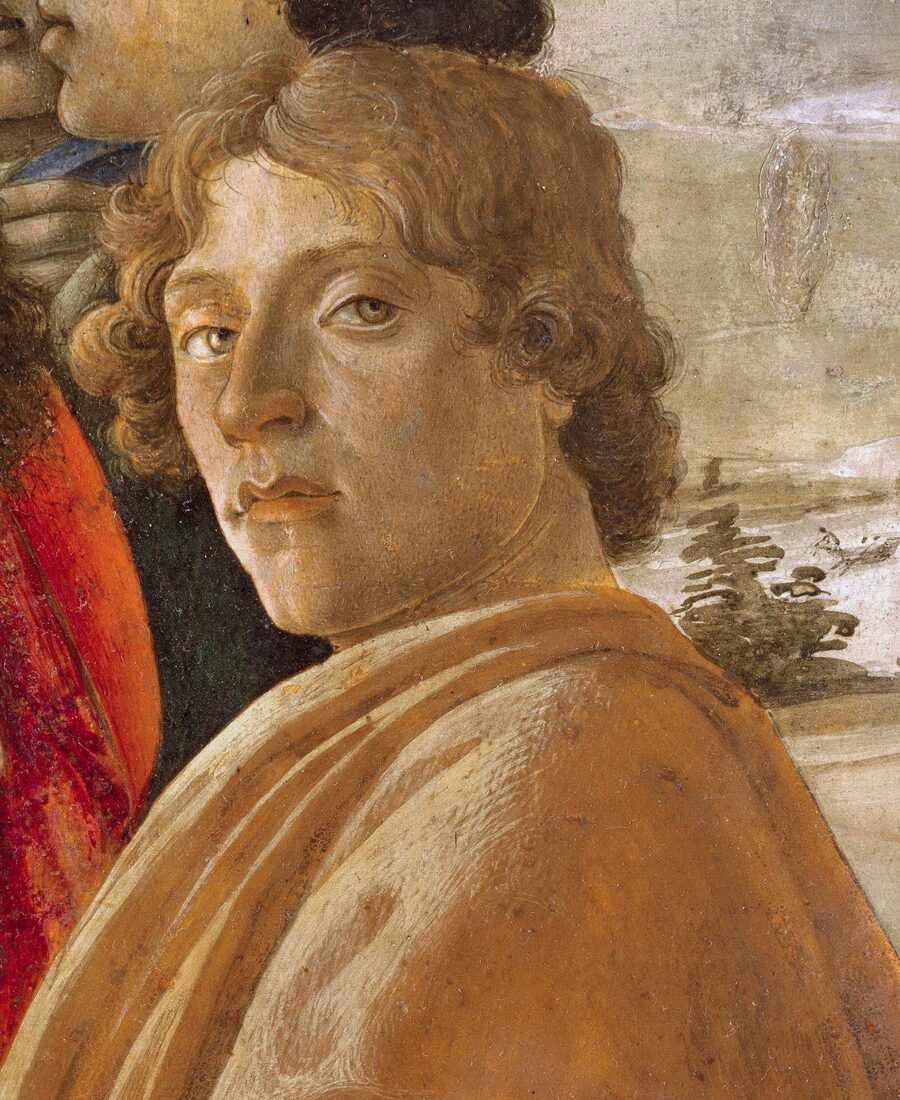

Key works
Works with a dedicated ArtAtlas page are highlighted in gold.
c. 1484-1486
Botticelli painted The Birth of Venus for the Medici milieu in Florence, joining classical myth, humanist poetry, and an unusually weightless figure in motion. The picture became a lasting emblem of beauty and of the Renaissance ambition to reconcile nature, the body, and ideal harmony.
1480
No one knows exactly what the painting means — scholars have been arguing since the 19th century, and there are at least a dozen competing interpretations involving Ovid, Poliziano's poetry, and Neoplatonic philosophy.
FAQ
Quick answers to what people most often search about this artist.
Sandro Botticelli was born around 1445 in Florence and died in 1510. He was the poet of the early Florentine Renaissance and worked for the Medici family.
His best-known works are The Birth of Venus and Primavera, mythological scenes that became emblems of the Renaissance.
His flowing, almost musical line and the wistful grace of his figures give his work a softness unlike any other Renaissance master.
Under the preacher Savonarola's influence, he is said to have burned some of his own 'pagan' paintings on the Bonfire of the Vanities, and died in near poverty.