Author
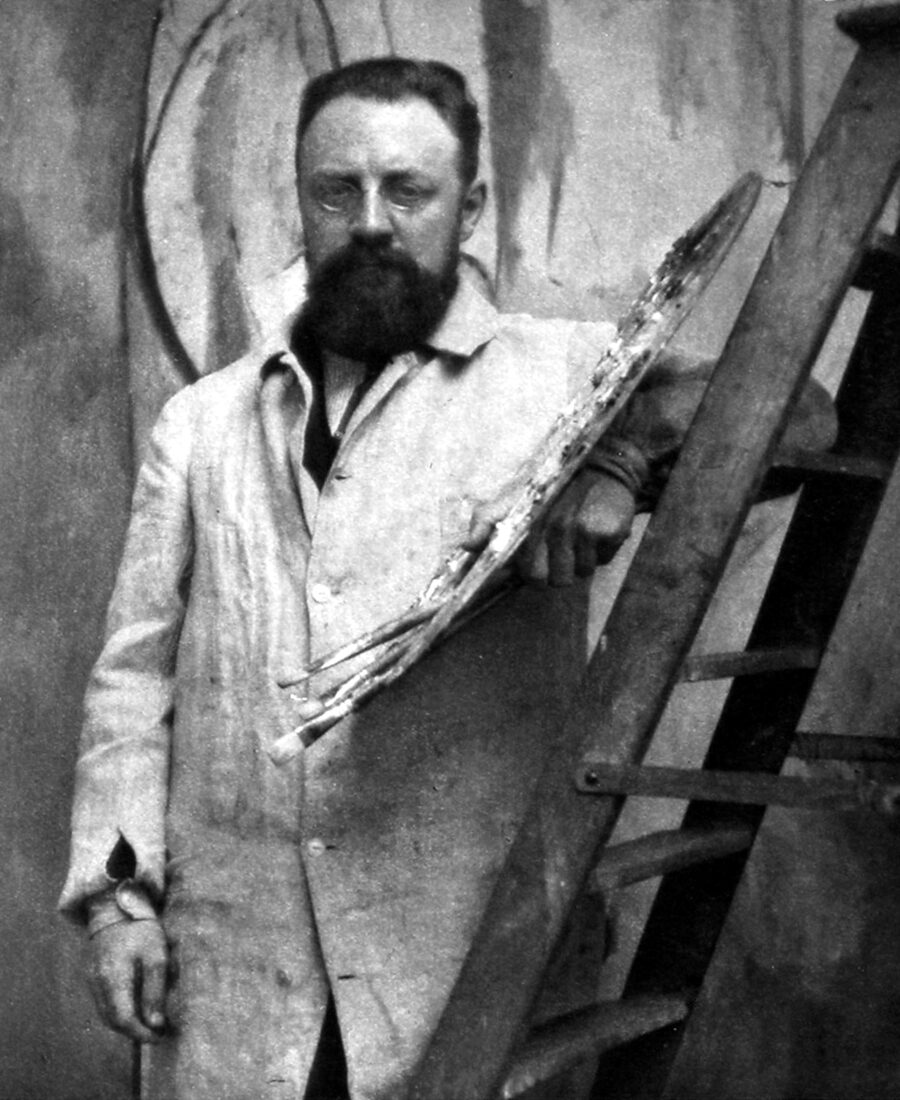
Henri Matisse
Movement / period
Modernism
Medium
painting
Location
National Gallery of Art, Washington, D.C.
The painting was bought almost immediately after the 1905 Salon d'Automne by Gertrude and Leo Stein, the American collectors who were among the first people anywhere to systematically buy Matisse and Picasso at the same time.

Highlights
Facts & legends
- Matisse painted this in the summer of 1905 at Collioure, a fishing village on the French Mediterranean coast — it was his first real breakthrough into pure, unblended color, done in roughly six weeks.
- The painting was bought almost immediately after the 1905 Salon d'Automne by Gertrude and Leo Stein, the American collectors who were among the first people anywhere to systematically buy Matisse and Picasso at the same time.
- When critics first saw it at the 1905 Salon d'Automne alongside Derain and Vlaminck, they called the whole group "fauves" — wild beasts — and the term stuck as an art movement name; Matisse never loved the label.
- The boats and masts visible through the window are not decorative — Matisse was painting the actual view from his rented room in Collioure, and the bright reflected light on the harbor wall is what drove him to push color so far beyond description.
- The canvas is quite small, only 55.2 x 46 cm, which surprises most people who've only seen reproductions — the psychological intensity comes entirely from color relationships, not scale.
- It ended up in the collection of Mrs. John Hay Whitney, one of New York's great 20th-century collectors, before the National Gallery of Art in Washington acquired it — the painting spent decades on Park Avenue before becoming a public treasure.
More details How a small window in the fishing port of Collioure became a Fauvist laboratory, why pink water and orange masts shocked the 1905 Salon, and where the future Matisse is already visible.
Summer in Collioure
A port became a colour laboratory
Matisse worked beside André Derain in 1905 and chose a modest domestic view.
Pink water, orange masts, and a multicoloured sky separate colour from description.
Matisse reached Collioure after doubt and financial strain; the younger Derain worked beside him at his invitation. They painted the same harbour, argued through pure colour, and watched Mediterranean light simplify shadow. Open Window was not solitary revelation but the result of an intense dialogue in which two painters tested one another's courage almost daily.
A window within the window
Depth is opened and contained
The inward doors make a second frame while reflections return outdoor colour to the room.
The canvas offers a view yet insists on its own flat surface.
The French window is also a balcony door, so perspective begins at a threshold one might cross. Yet panes reflect interior pink and green unevenly and the sill tilts. Space remains credible just long enough for entry before colour returns us to surface. Matisse holds the image between room and pattern rather than destroying the view.
A boat in four strokes
Few marks create movement
The central boat is assembled from only a handful of thick coloured strokes.
Flickering touches meet the broad colour zones of Matisse's future work.
Thick strokes of the central boat are surrounded by places where canvas shows and paint appears provisional. Academic eyes could read incompletion, but exposed ground works as light and keeps saturated hues from becoming heavy. Speed is partly real and partly designed: the hand leaves a trace the viewer must finish through recognition.
The wild beasts
An insult named a movement
At the 1905 Salon d'Automne the intense palette was judged violent and the artists called fauves.
The mockery became the name of the first French avant-garde movement of the century.
At the Salon d'Automne, bright canvases by Matisse, Derain, Vlaminck, and others shared a room with a small Renaissance-like sculpture. Critic Louis Vauxcelles described the contrast as 'Donatello among the wild beasts.' Fauves first named a group effect, not a signed manifesto. Journalism supplied a label for visual shock.
The later Matisse begins here
Opposites make serenity
Cool and hot colours, small strokes and large planes hold a clear rhythm.
John Hay Whitney bought the work in 1952; it entered the National Gallery in 1998.
Later Matisse repeatedly built pictures from windows, balconies, textiles, and sea views. His central principle is already here: colour need not copy an object's local tone but must coordinate the entire painting. Pink water succeeds because it answers red doors and green marks. Freedom is not randomness; every 'wrong' colour has a role in balance.
Official sources
Where to check
- Open Window, Collioure: object, audio, and provenanceNational Gallery of Art, Washington
- Matisse and Derain at CollioureNational Gallery of Art, Washington
- Fauvist colour and expressionNational Gallery of Art, Washington
- Henri MatisseMuseum of Modern Art
- FauvismTate
- FauvismThe Metropolitan Museum of Art
Visual context