
The stone slab the bearers stand on juts at a sharp angle straight toward you, as if Christ is being lowered into your own space.

Highlights
Facts & legends
- This altarpiece was so admired that Rubens, Cézanne and even Géricault copied it — few paintings influenced so many great artists.
- The stone slab the bearers stand on juts at a sharp angle straight toward you, as if Christ is being lowered into your own space.
- Caravaggio painted saints from ordinary people — Christ's heavy, earthbound body is a real model's, with no idealization.
- Napoleon carried it off to Paris; it was later returned and now hangs in the Vatican's painting gallery.
- The woman's upflung arms at the top are the only burst of despair in a scene where everyone else holds their grief in.
More details Why the famous Entombment shows a different moment, how its stone slab joined altar and viewer, and why Nicodemus looks directly out at us.
The title misleads
Christ has not yet entered the tomb
The Vatican identifies the moment as the body being lowered by John and Nicodemus onto the Stone of Anointing. Its sharp edge projects toward us.
Caravaggio chooses an unfinished action: weight, effort and the pause before burial.
The painted stone met a real altar
The original setting completed the image
Girolamo Vittrice commissioned it for his chapel in Santa Maria in Vallicella, the Chiesa Nuova. Above the altar, the painted slab extended its stone surface.
A diagonal descends from raised hands through heads and body to the viewer's level.
Nicodemus looks out
The witness becomes a possible helper
He braces the legs and meets our gaze, while John's fingers touch Christ's wound. Sacred history becomes physical work.
The Virgin, Magdalene and Mary of Cleophas each perform a different language of grief.
Light assigns attention
Darkness removes everything unnecessary
White cloth, corpse, carriers and faces emerge in sequence. Light describes responsibility rather than a room.
Monumentality survives beside the awkward truth of carrying a dead body.
Paris and return
A church image became a museum masterpiece
Taken to Paris in 1797 under the Treaty of Tolentino, it returned in 1817 and entered the papal collection rather than its chapel.
Copies by later artists, including Rubens, carried forward its fusion of architecture, bodily fact and direct address.
Official sources
Where to check
- Official institution site Vatican Museums
- The Entombment of Christ: official recordVatican Museums
- The Pinacoteca and its collectionVatican Museums
Visual context
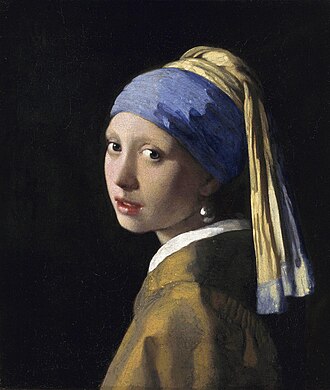 Girl with a Pearl Earring
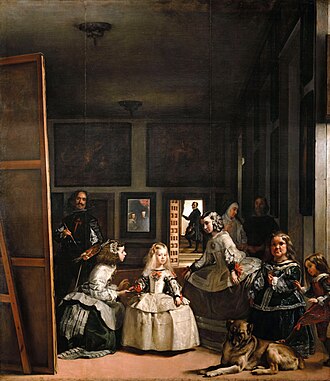 Las Meninas


