
From the artist's life
Caravaggio killed a man in a brawl, fled Rome with a death sentence on his head, and died at 38 on a lonely beach — still hoping for a papal pardon.
Source: Wikipedia / WikimediaBaroque
Caravaggio (1571–1610) revolutionised European art with violent realism and extreme chiaroscuro — pitch-black shadow pierced by raking light. He painted saints as ordinary, dirty-footed people, scandalising and electrifying Rome.
His tenebrism spread across Europe within a decade, shaping Rubens, Rembrandt, Velázquez and a whole generation of Caravaggisti.
Caravaggio killed a man in a brawl, fled Rome with a death sentence on his head, and died at 38 on a lonely beach — still hoping for a papal pardon.
Source: Wikipedia / Wikimedia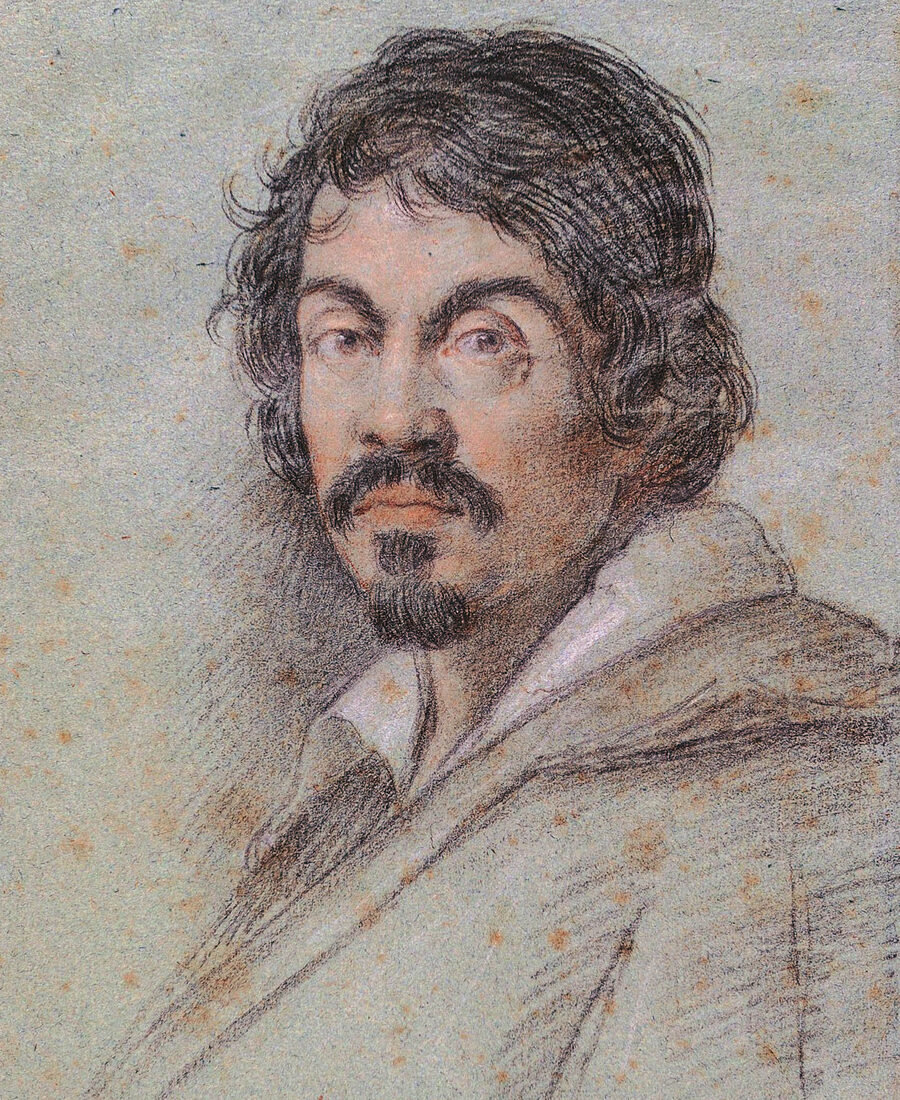

Key works
Works with a dedicated ArtAtlas page are highlighted in gold.
1609
The Calling of Saint Matthew is an oil painting by the Italian Baroque master Caravaggio that depicts the moment Jesus Christ calls on the tax collector Matthew to follow him. It was completed in 1599–1600 for the Contarelli Chapel in the church of the French congregation, San Luigi dei Francesi in Rome, where it remains.
1600
Caravaggio painted this canvas in 1600 as the second attempt — the Cerasi Chapel had already rejected his first version (now in a private collection) because the patrons found it too undignified: Paul looked like a drunk peasant falling off a horse, not a saint struck by divine light.
1602
This altarpiece was so admired that Rubens, Cézanne and even Géricault copied it — few paintings influenced so many great artists.