
Leonardo da Vinci: contribution to art, major works, and significance | Artatlas

High Renaissance

Leonardo da Vinci

Leonardo da Vinci is the figure through whom art ceases to be only craft and becomes an intellectual system. His painting is built on observation, scientific precision, and extraordinary plasticity of light.

1452-1519 · artist, engineer, researcher

Leonardo matters not only as the maker of masterpieces, but as a model of the future artist: an author who thinks through drawing, experiment, hypothesis, and form.

Creator story

Surprising fact

The Last Supper began to die almost at once. Instead of true fresco Leonardo used tempera and oil on dry plaster, which let him rework the faces endlessly but never bonded to the wall: within a few decades the paint was flaking, and by the mid-16th century writers described the mural as ruined.

Source: Wikipedia / Wikimedia
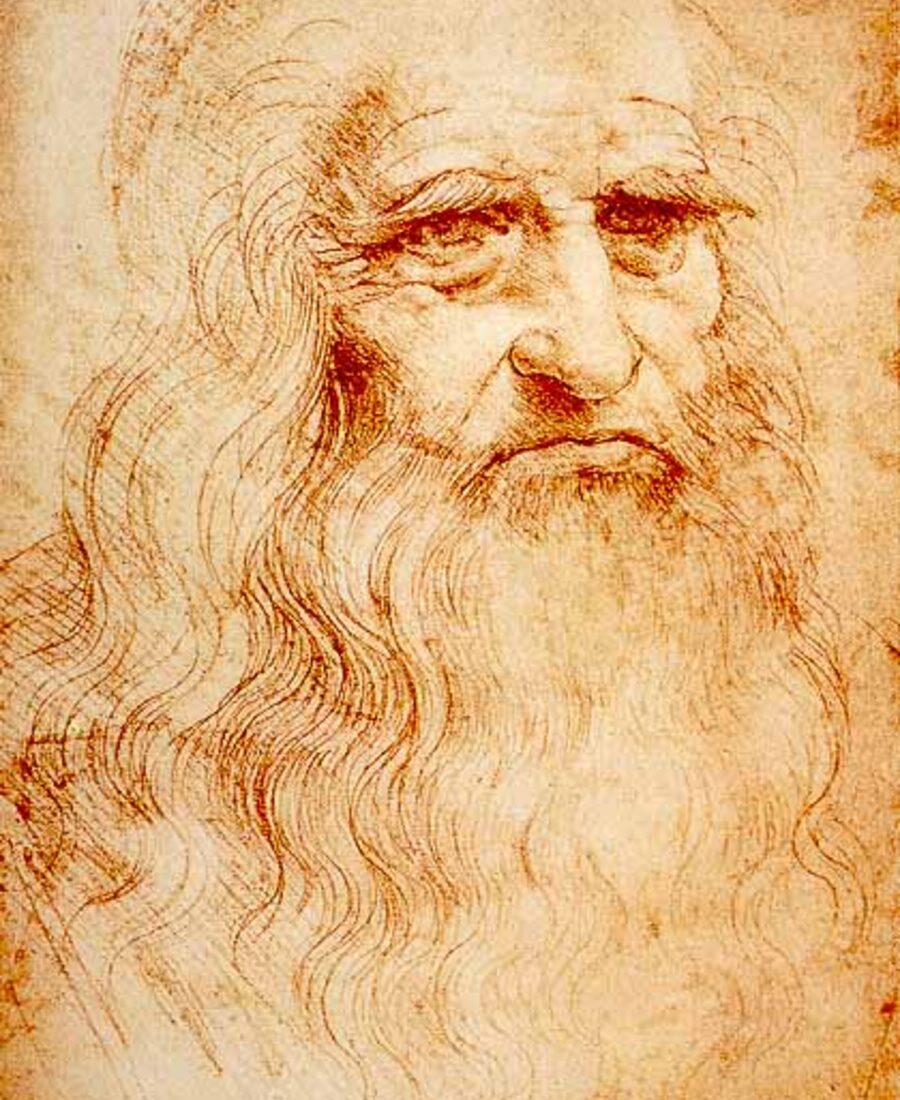
Portrait of Leonardo da Vinci
Portrait of Leonardo da Vinci: Wikimedia Commons.
  • He united artistic intuition and scientific method in a single authorial approach.
  • He made the human face and inner state central subjects of painting.
  • He expanded the meaning of drawing as a tool of thought, not merely preparation.
Leonardo da Vinci, Mona Lisa

Key works

Three entry points into the world of Leonardo da Vinci

These works make it easiest to see how the artist changed form, content, and the very way art could exist in culture.

1503-1506

Mona Lisa

A psychological portrait that changed the history of the gaze.

1495-1498

The Last Supper

A dramatic moment built through composition and gesture.

c. 1490

Vitruvian Man

A symbol of the link between art, anatomy, and geometry.

FAQ

Frequently asked questions

Quick answers to what people most often search about this artist.

When did Leonardo da Vinci live?

Leonardo da Vinci lived from 1452 to 1519. He was born near the Tuscan town of Vinci and died at Amboise in France, where King Francis I had invited him in 1516.

Why is Leonardo da Vinci famous, and what did he change in art?

He turned painting into research: his sfumato dissolved outlines into soft gradations of light and shade, and he tied art to anatomy, optics and engineering. In his hands portraiture became a record of inner life.

What is Leonardo da Vinci's most famous painting?

The best known is the Mona Lisa (1503-1506), now in the Louvre. It became a global icon after it was stolen from the museum in 1911 and recovered two years later in Florence.

Why are Leonardo da Vinci's notebooks so hard to read?

Leonardo kept his notes in mirror writing: the lines run right to left with the letters reversed, easy to read only in a mirror. About 6,000 such pages survive, covering anatomy, water, machines and recipes for paint.