
From the artist's life
Klimt used real gold leaf, inspired by Byzantine mosaics he saw in Ravenna; his father had been a gold engraver.
Source: Wikipedia / WikimediaSymbolism
Gustav Klimt (1862–1918) led the Vienna Secession and created the shimmering, gold-leaf masterpieces of his Golden Phase. Decorative, sensual and symbolic, The Kiss is among the most reproduced paintings in the world.
Klimt fused fine art with ornament and eroticism, bridging Symbolism and the modern decorative arts.
Klimt used real gold leaf, inspired by Byzantine mosaics he saw in Ravenna; his father had been a gold engraver.
Source: Wikipedia / Wikimedia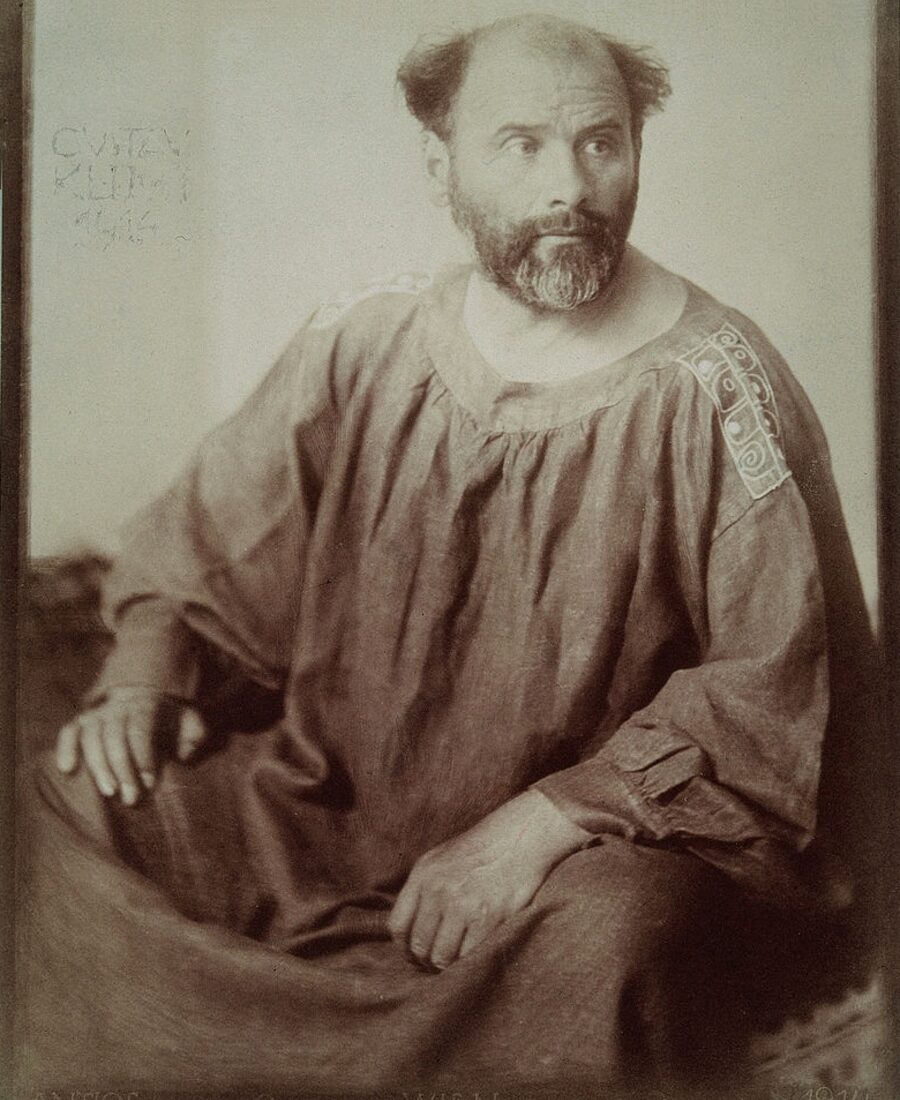

Key works
Works with a dedicated ArtAtlas page are highlighted in gold.
1907-1908
The Kiss is an oil-on-canvas painting with added gold leaf, silver and platinum by the Austrian Symbolist painter Gustav Klimt. It was painted at some point in 1907 and 1908, during the height of what scholars call his "Golden Period".
1907
FAQ
Quick answers to what people most often search about this artist.
Gustav Klimt was born in 1862 near Vienna and died in 1918. He led the Vienna Secession and became the defining painter of Austrian Art Nouveau.
Klimt was the first to combine painting with real gold leaf and ornament, creating his instantly recognisable Golden Phase. His painting The Kiss is one of the most reproduced images in the world.
His best-known work is The Kiss (1907–1908), showing an embracing couple wrapped in gold ornament. Portrait of Adele Bloch-Bauer I is also among his most celebrated paintings.
It refers to works from 1899–1910 in which Klimt covered the canvas with real gold leaf, inspired by the Byzantine mosaics he saw in Ravenna — his father had been a gold engraver.