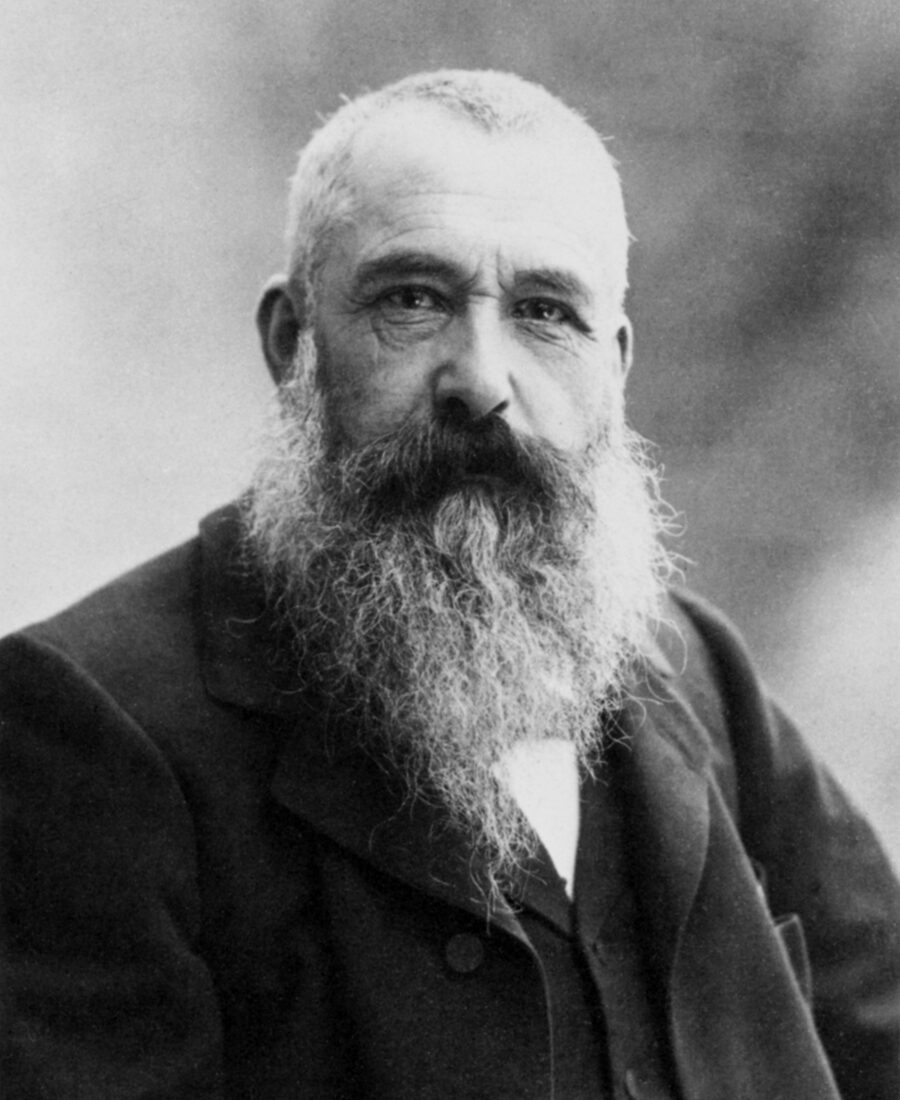
Author
Claude Monet
Movement / period
Impressionism
Medium
painting
Location
Art Institute of Chicago, Chicago
When fifteen of the Haystacks paintings went on show in Paris at the Durand-Ruel gallery in May 1891, all fifteen sold out before the exhibition even closed — an almost unheard-of commercial sweep for a living painter at the time.

Highlights
Facts & legends
- The Haystacks series isn't one painting — Monet made at least 25 canvases of the same grain stacks near his Giverny home between 1890 and 1891, each capturing a different hour, season, or weather condition.
- When fifteen of the Haystacks paintings went on show in Paris at the Durand-Ruel gallery in May 1891, all fifteen sold out before the exhibition even closed — an almost unheard-of commercial sweep for a living painter at the time.
- A young Wassily Kandinsky saw one of the Haystacks paintings in Moscow in 1895 and couldn't identify what the subject was at first — that disorienting blur of color was the moment he realized pure color and form could carry emotional weight without depicting anything literally, which became the seed of abstract art.
- The Art Institute of Chicago canvas (Stacks of Wheat, End of Summer, 1890–91) measures roughly 60 by 100 centimeters — intimate enough that you can take in the whole surface in a single glance, which Monet considered essential to the immediacy of the light effect.
- Monet worked on these paintings outdoors in real time, dragging a wheelbarrow of canvases into the fields and switching between them as light shifted — a method his stepdaughter Blanche Hoschedé helped coordinate like a production line.
- In November 2019, one of the Haystacks canvases sold at Sotheby's New York for $110.7 million, setting a record for Monet at auction and confirming this series as among the most financially valuable groups of paintings ever made.
Estimated value
What it is worth today
The Haystacks are spread across museums worldwide; individual canvases from the series have reached about $110 million at auction.
More details Why Monet's famous haystacks were really stores of wheat, how a Giverny field became an instrument for measuring light, and what X-rays found beneath images that appear instantaneous.
Not hay
Meules were stores of wheat
Farmers stacked sheaves around a dense core until threshing.
The form meant food, labour, and value, not generic rural decoration.
A stack was agricultural engineering. Sheaves were arranged so rain ran down steep sides while grain waited for threshing. Monet's stable silhouette is therefore not an abstract pyramid; it stores summer labour in a winter landscape. The slow farming cycle becomes a measure for fast-changing light.
A calendar from one motif
Monet painted differences, not copies
Hour, weather, season, snow, and thaw changed around a stable silhouette.
One or two stacks and shifting viewpoints prevent the series from becoming a formula.
The field lay near his home, but a repeated viewpoint did not mean mechanical recording. Monet changed distance, horizon, and number of stacks, making the mass almost a mountain or a small sign. The series rewards side-by-side vision: difference is clearer between neighbouring versions than inside one canvas.
Canvases waited
Several paintings developed in parallel
Monet changed supports as light changed, but returned over long periods and let layers dry.
Each work is a constructed memory rather than a photographic instant.
Thread matches helped researchers show that several paintings were cut from the same roll. This materially confirms parallel work: supports were prepared as a group before final results. Yet identical cloth did not produce identical technique—ground shows in one, paint rises densely in another, and winter surfaces differ from summer.
X-rays found revisions
Spontaneity was edited
Technical studies reveal stacks moved, enlarged, or entirely painted out.
Green early states even survive beneath some winter surfaces.
X-radiography and microscopy reveal not only changed forms but different handling. Monet thinned mixtures, built skies with zigzag strokes, scraped or covered layers. Nature did not dictate one procedure. For each state he reinvented a surface capable of holding a particular atmosphere.
Fifteen together
The exhibition made time visible
Durand-Ruel showed fifteen Meules in May 1891 under titles distinguishing season and light.
The serial display prepared Monet's poplars, cathedrals, and London views.
In May 1891 Durand-Ruel exhibited a group of Stacks in Paris. Their success made seriality an artistic event: buyers acquired rural views that were also variants of one experiment in time. Poplars, cathedrals, and water lilies continued the method. Repetition became a way to see what one painting conceals.
Official sources
Where to check
- Stacks of Wheat, 1890–91: catalogue and technical studyArt Institute of Chicago
- Stacks of Wheat (End of Summer)Art Institute of Chicago
- Monet's Haystacks ReconsideredArt Institute of Chicago
- Haystacks (Effect of Snow and Sun)Metropolitan Museum of Art
- Grainstack (Snow Effect)Museum of Fine Arts Boston
- Haystacks seriesEncyclopaedia Britannica
Visual context