
Wassily Kandinsky: contribution to art, major works, and significance | Artatlas

Abstraction and the avant-garde

Wassily Kandinsky

Kandinsky is one of the artists who quite literally changed the alphabet of art. For him, point, line, circle, and color possessed their own emotional and spiritual energy.

1866-1944 · painter and theorist

His theory and practice made abstraction not a random experiment, but a full philosophy of twentieth-century art.

Creator story

Surprising fact

Kandinsky came to painting only around the age of thirty. He took a law degree at Moscow University and lectured in law, and only in 1896 turned down an academic career to leave for Munich and study painting. One jolt he named was Monet's Haystacks in Moscow: a canvas whose subject he simply could not make out.

Source: Wikipedia / Wikimedia
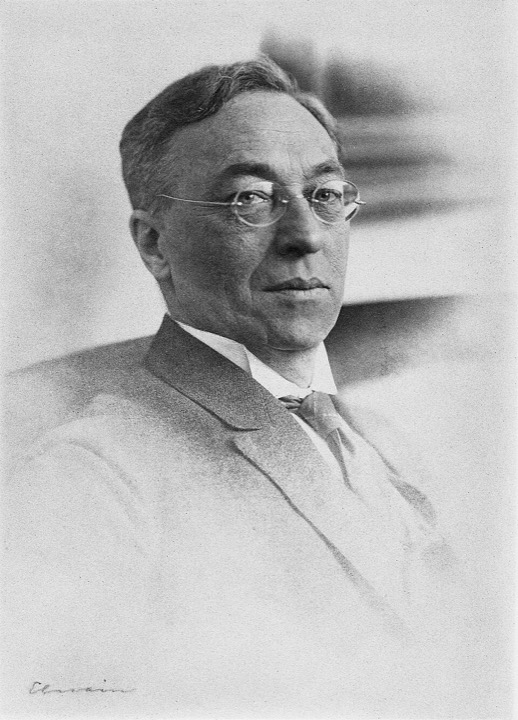
Wassily Kandinsky, portrait photograph
A photograph of Wassily Kandinsky that reminds the viewer that behind geometric abstraction stood a living author who joined art, music, and theory into one system.
  • He was one of the founders of abstract art and one of its major theorists.
  • He translated musical thinking into visual form.
  • He redefined composition as a system of relationships rather than depiction of things.
Wassily Kandinsky, Composition VIII

Key works

Three entry points into the world of Wassily Kandinsky

These works make it easiest to see how the artist changed form, content, and the very way art could exist in culture.

FAQ

Frequently asked questions

Quick answers to what people most often search about this artist.

When did Wassily Kandinsky live?

Wassily Kandinsky lived from 1866 to 1944. He was born in Moscow and died at Neuilly-sur-Seine outside Paris, spending most of his working life in Germany and France as a painter and art theorist.

Why is Kandinsky famous and what did he change in art?

He was one of the founders of abstract art and its leading theorist. Kandinsky showed that painting could work without a recognizable subject, and argued the case in his 1911 book Concerning the Spiritual in Art.

What is Kandinsky's most famous painting?

Most often it is Composition VIII (1923), where circles, triangles and sharp lines replace the visible world entirely. It was painted during his Bauhaus years and is held at the Guggenheim Museum in New York.

Is it true that Kandinsky heard colors?

He consistently described color as sound: in Concerning the Spiritual in Art light blue is likened to a flute, darker blue to a cello, and the deepest blue to an organ. That musical logic became the basis of his abstraction.