
From the artist's life
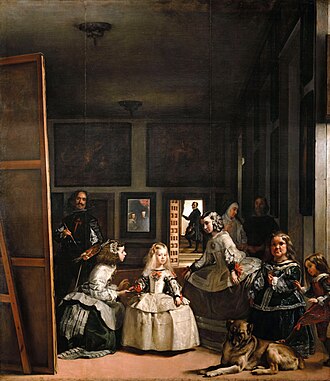
In Las Meninas Velázquez painted himself at the easel — and a mirror at the back reflects the king and queen, placing the royal couple where we, the viewers, stand.
Source: Wikipedia / WikimediaBaroque
Diego Velázquez (1599–1660) was the leading painter of the Spanish Golden Age and court artist to King Philip IV. His masterpiece Las Meninas is one of the most analysed paintings in history.
Manet called him the painter of painters; his free brushwork pointed straight toward Impressionism two centuries early.
In Las Meninas Velázquez painted himself at the easel — and a mirror at the back reflects the king and queen, placing the royal couple where we, the viewers, stand.
Source: Wikipedia / Wikimedia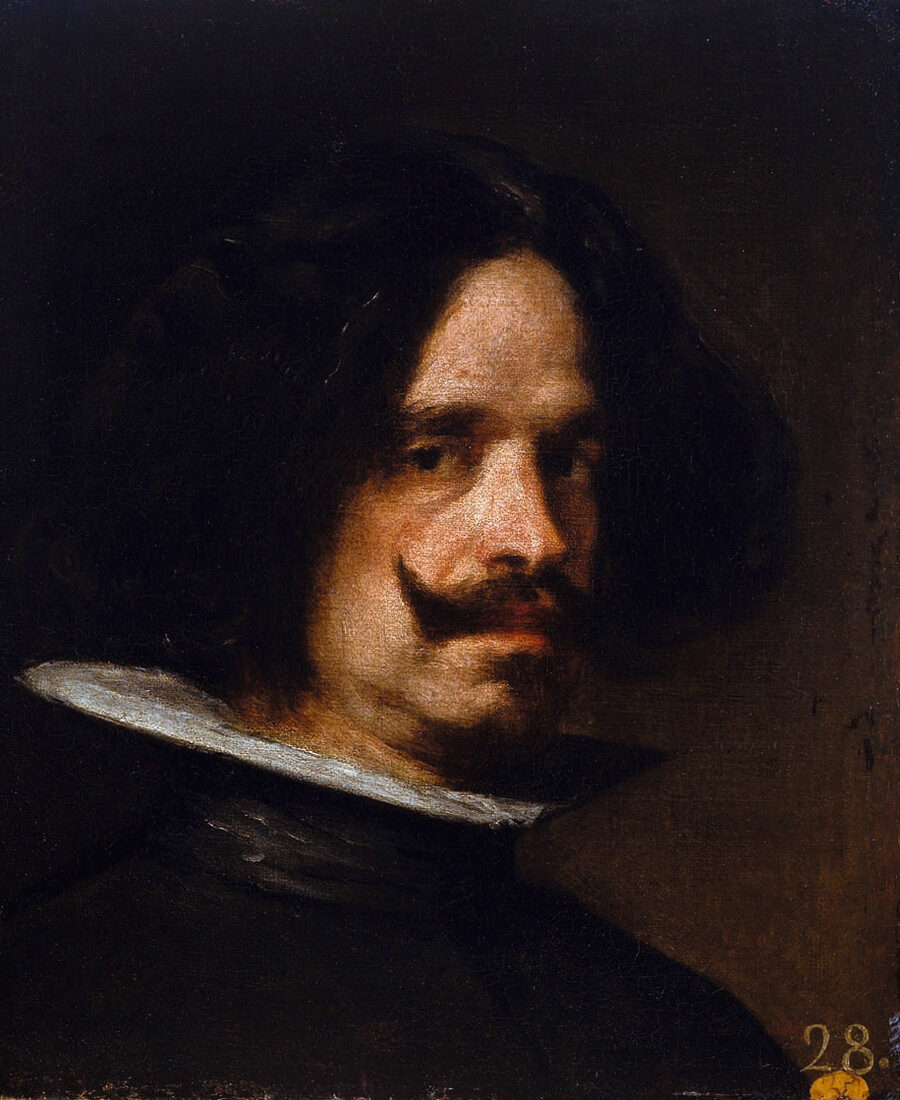
Key works
Works with a dedicated ArtAtlas page are highlighted in gold.
1656
Las Meninas is a 1656 painting in the Museo del Prado in Madrid, by Diego Velázquez, the leading artist in the court of King Philip IV of Spain and Portugal, and of the Spanish Golden Age.
1655
Las Hilanderas is a painting by the Spanish painter Diego Velázquez, in the Museo del Prado of Madrid, Spain. It is also known by the title The Fable of Arachne. Most scholars regard it as a late work by the artist, dating from 1657 to 1658, but some argue that it was done c.