
X-ray analysis revealed Vermeer originally painted a basket hanging on the wall and a man standing in the doorway — both were painted out before he finished, leaving the composition radically stripped down.
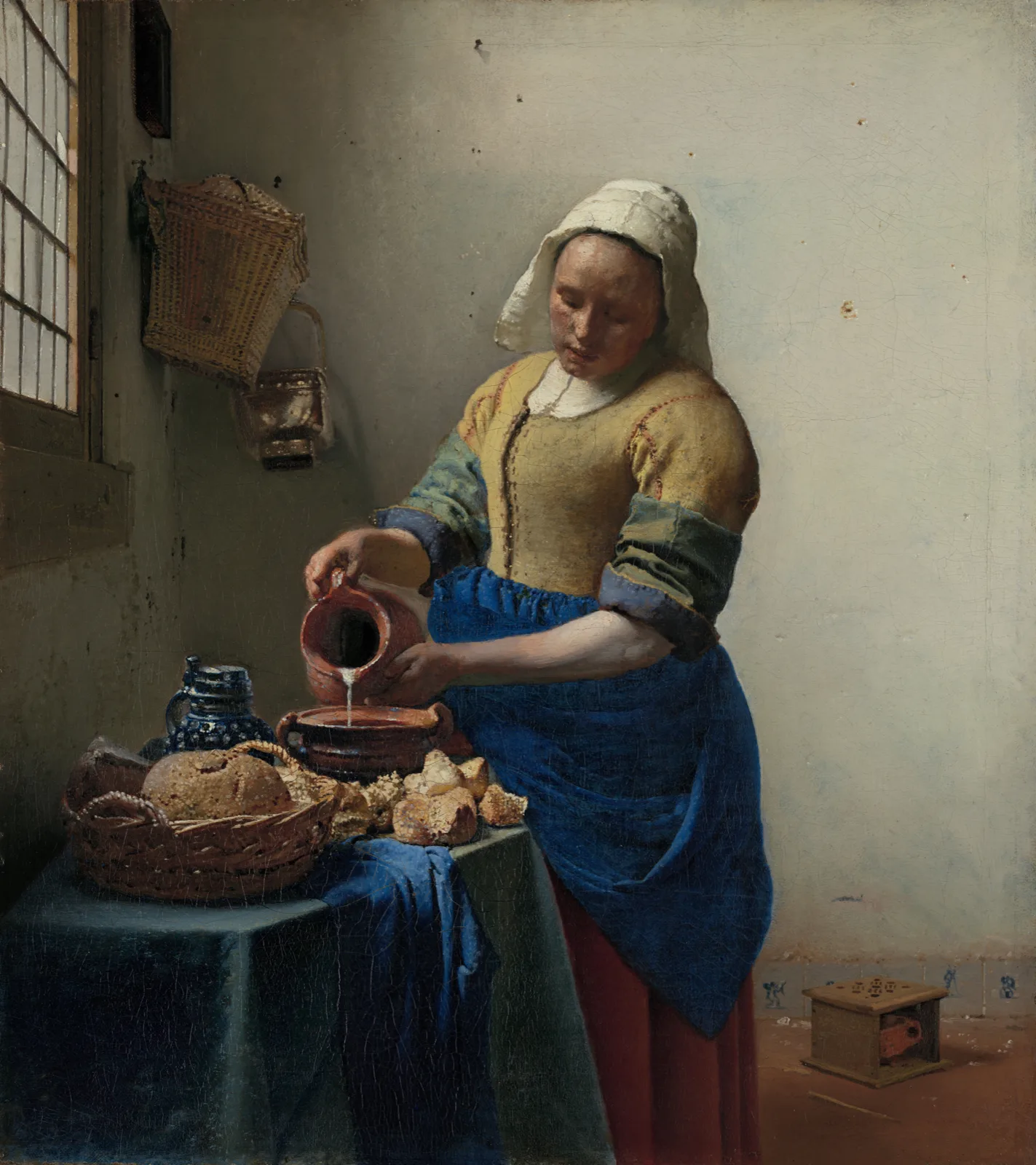
Highlights
Facts & legends
- X-ray and infrared scans (Rijksmuseum, 2022) revealed that Vermeer painted out a wooden jug rack on the wall and a wicker fire basket, simplifying the background.
- X-ray analysis revealed Vermeer originally painted a basket hanging on the wall and a man standing in the doorway — both were painted out before he finished, leaving the composition radically stripped down.
- The painting never left Dutch hands until 1908, when the Rijksmuseum bought it at auction for 50,000 guilders — a then-record price that made international headlines and caused a diplomatic row with the UK collector who lost it.
- Vermeer mixed sand and ground glass into his paint to achieve that impossibly tactile crust of bread texture, a technique only identified under microscopic analysis in the 20th century.
- In the lower left corner, Vermeer included a Delft floor tile with Cupid — a detail easily missed but widely read as a quiet joke about love and domestic labor existing side by side.
- The model's identity is unknown, but her strong build and focused downward gaze were so unusual for the era — most Dutch genre paintings showed women as passive or decorative — that contemporaries found the image almost confrontational.
More details Behind The Milkmaid's silence lie a rapid black underpainting, an erased jug rack, a hidden fire basket and one moving line: the stream of milk.
Only the milk moves
An everyday task becomes monumental
The small canvas shows a kitchen maid pouring milk while bread, pottery and window light remain still. Seen slightly from below, she carries the weight of a statue rather than a comic servant type.
The familiar title suggests a profession, but the woman is more likely a domestic servant absorbed in preparing food.
A recipe on the table
The bread may be destined for pudding
Rijksmuseum research suggests stale bread was being soaked in milk, perhaps with beer from the blue German jug. The scene is practical household economy, not a display of luxury.
A foot warmer and tiny Delft tiles survive at the edge without distracting from hands, jug and stream.
Vermeer removed the clutter
Scans revealed a jug rack and fire basket
Macro-XRF and infrared research found a rack sketched behind her head and a large woven fire basket below. Vermeer painted both out.
The famous quiet is therefore an editorial decision: he cleared wall and floor so nothing competes with concentration.
A fast beginning
Calm surface conceals energetic construction
A broad black line beneath the arm shows that Vermeer first blocked in light and dark quickly. A pinhole above the right arm marks the vanishing point used with a string.
The low viewpoint makes us look slightly upward and lends the narrow kitchen architectural stability.
Light made of dots
Bread reveals how the surface works
Bright coloured points across crust and basket translate glints rather than literal crumbs. Copper, cloth and plaster each carry light differently.
The painting endures because elimination, perspective and one flowing line turn focused work into a major human subject.
Official sources
Where to check
- Official institution site Rijksmuseum
- Official collection / archive Rijksmuseum
- The Milkmaid: catalogue recordRijksmuseum
- Discoveries beneath the paintRijksmuseum
- Vermeer exhibition textsRijksmuseum
Visual context
 Johannes Vermeer
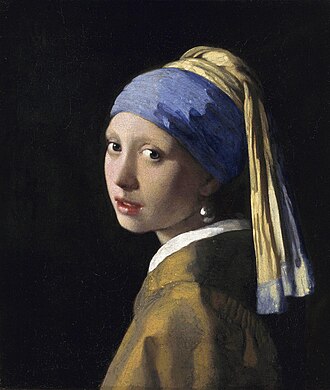 Girl with a Pearl Earring
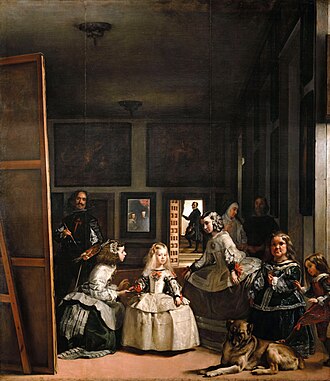 Las Meninas


