
From the artist's life
Vermeer likely used a camera obscura: tiny circles of confusion — out-of-focus highlights — appear in his paintings exactly as a lens would render them.
Source: Wikipedia / WikimediaBaroque
Johannes Vermeer (1632–1675) of Delft painted fewer than 40 known works, mostly silent domestic interiors lit by a cool, pearly daylight. Forgotten for two centuries, he now ranks beside Rembrandt as a giant of the Dutch Golden Age.
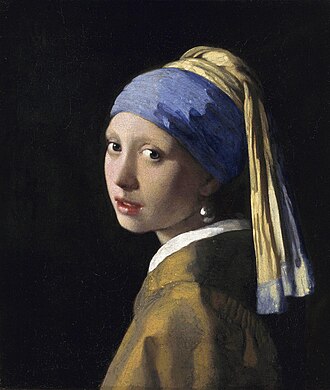
Rediscovered in the 19th century, Vermeer became the painter of light and stillness; Girl with a Pearl Earring is now one of the most famous faces in art.
Vermeer likely used a camera obscura: tiny circles of confusion — out-of-focus highlights — appear in his paintings exactly as a lens would render them.
Source: Wikipedia / Wikimedia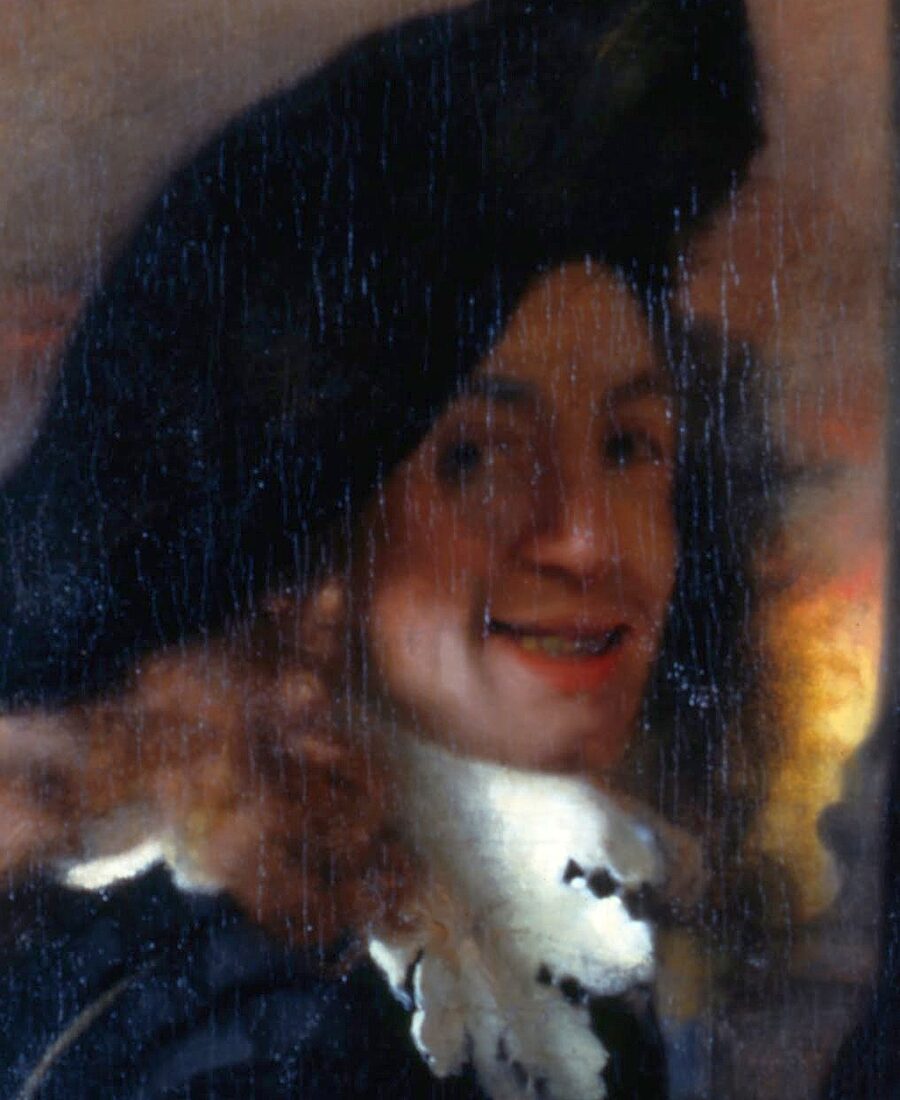
Key works
Works with a dedicated ArtAtlas page are highlighted in gold.
c. 1665
Girl with a Pearl Earring is an oil painting by Dutch Golden Age painter Johannes Vermeer, dated c. 1665. Going by various names over the centuries, it acquired its present title towards the end of the 20th century.
1667
The Art of Painting, also known as The Allegory of Painting, or Painter in his Studio, is a 17th-century oil on canvas painting by Dutch painter Johannes Vermeer. It is owned by the Austrian Republic and is on display in the Kunsthistorisches Museum in Vienna.
1660
FAQ
Quick answers to what people most often search about this artist.
Johannes Vermeer was born in Delft in 1632 and died in 1675. He was little known in his lifetime and left fewer than 40 known paintings.
His most celebrated work is Girl with a Pearl Earring, often called the 'Mona Lisa of the North' for her enigmatic gaze.
He painted quiet domestic scenes bathed in cool, pearly light from a single window — an effect still admired for its precision and calm.
Scholars consider it likely: his paintings contain soft circles of blurred light — 'circles of confusion' typically produced by a lens rather than the naked eye.