
From the artist's life
Hokusai used over 30 different names in his life and claimed that only past 70 was anything he made worth counting — hoping to paint truly alive at 110.
Source: Wikipedia / WikimediaPrints and Graphics
Katsushika Hokusai (1760–1849) was the Japanese master of ukiyo-e woodblock prints and creator of The Great Wave off Kanagawa — perhaps the most famous image in all of Asian art.
Hokusai's prints flooded into Europe and ignited Japonisme, shaping Monet, Van Gogh and Degas.
Hokusai used over 30 different names in his life and claimed that only past 70 was anything he made worth counting — hoping to paint truly alive at 110.
Source: Wikipedia / Wikimedia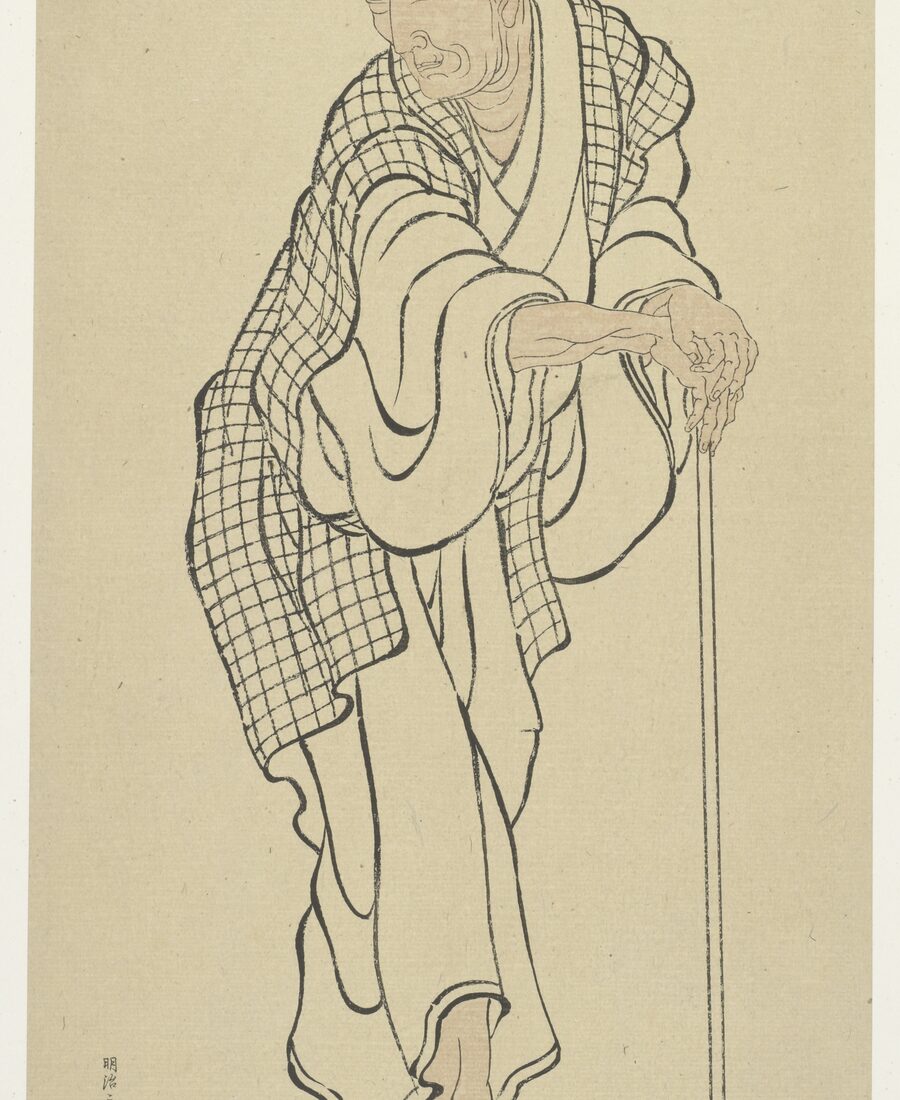

Key works
Works with a dedicated ArtAtlas page are highlighted in gold.
c. 1831
The Great Wave off Kanagawa is a woodblock print by the Japanese ukiyo-e artist Hokusai (1760–1849), created in late 1831 during the Edo period of Japanese history. The print depicts three boats moving through a storm-tossed sea, with a large, cresting wave forming a spiral in the centre over the boats and Mount Fuji in the background.
1830
Fine Wind, Clear Morning, also known as Red Fuji, is a woodblock print by Japanese artist Hokusai (1760–1849), part of his Thirty-six Views of Mount Fuji series, dating from c. 1830 to 1832. The work has been described as "one of the simplest and at the same time one of the most outstanding of all Japanese prints".