
From the artist's life
Rembrandt left around 80 self-portraits across his life, in paint, etchings and drawings — a unique visual diary tracing his face from confident youth to bankrupt, weathered old age.
Source: Wikipedia / WikimediaBaroque
Rembrandt van Rijn (1606–1669) was the greatest master of the Dutch Golden Age, unmatched in his use of light, shadow and human empathy. From The Night Watch to a lifetime of unflinching self-portraits, he painted the inner life as no one had before.
His expressive light and psychological depth made him a touchstone for every later painter of the human condition.
Rembrandt left around 80 self-portraits across his life, in paint, etchings and drawings — a unique visual diary tracing his face from confident youth to bankrupt, weathered old age.
Source: Wikipedia / Wikimedia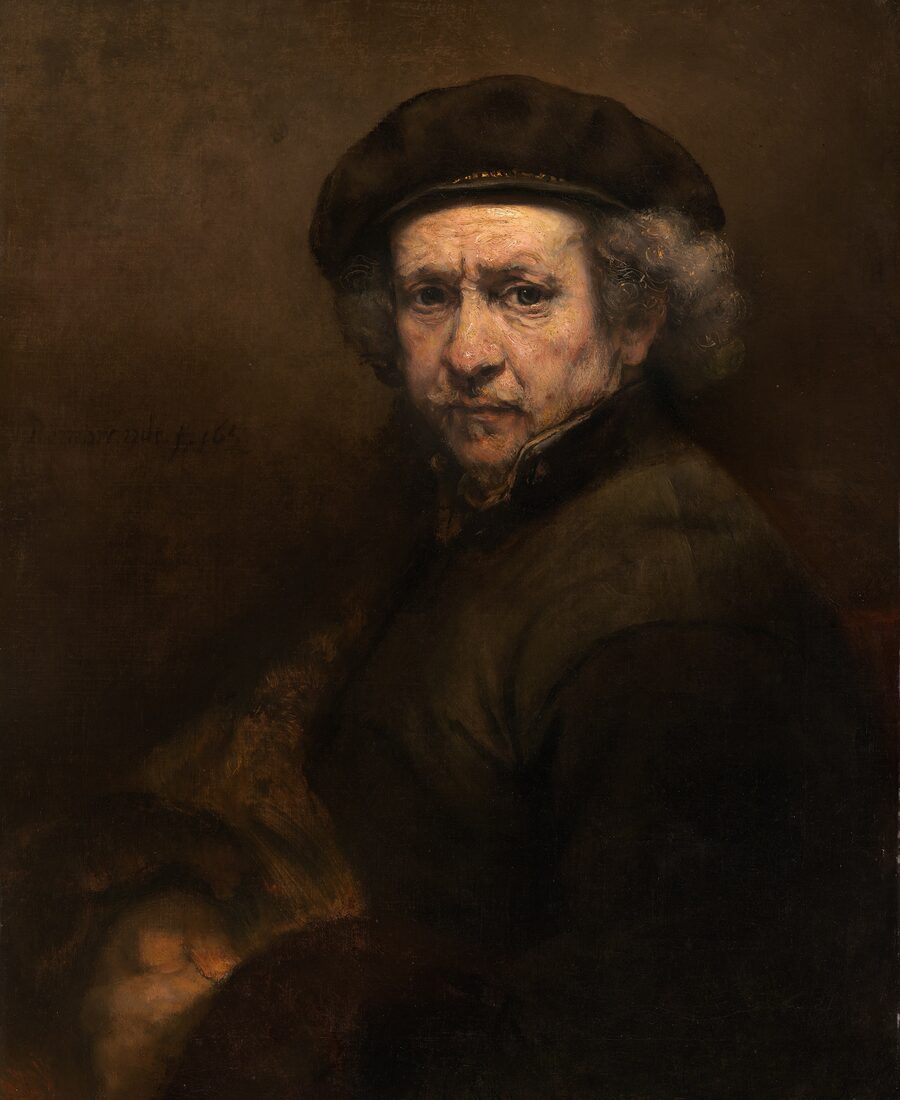

Key works
Works with a dedicated ArtAtlas page are highlighted in gold.
1632
The Anatomy Lesson of Dr. Nicolaes Tulp is a 1632 oil painting on canvas by Rembrandt housed in the Mauritshuis museum in The Hague, Netherlands. It was originally created to be displayed by the Surgeons Guild in their meeting room.
1642
Militia Company of District II under the Command of Captain Frans Banninck Cocq, also known as The Shooting Company of Frans Banning Cocq and Willem van Ruytenburch, but commonly referred to as The Night Watch, is a 1642 painting by Rembrandt van Rijn.