
From the artist's life
The statue was found on the Greek island of Milos in 1820, already missing its arms; debate over what it originally held — an apple, a mirror or a spindle — continues to this day.
Source: Wikipedia / WikimediaAntiquity
Alexandros of Antioch was a Hellenistic sculptor whose name survives thanks to an inscription on the statue's now-lost pedestal. His authorship of the Venus de Milo remains debated among scholars, but the statue attributed to him became one of the most recognisable images of female beauty in Western art.
The Venus de Milo became the benchmark of Hellenistic sculpture and one of the Louvre's flagship exhibits, standing alongside the Mona Lisa and the Winged Victory of Samothrace.
The statue was found on the Greek island of Milos in 1820, already missing its arms; debate over what it originally held — an apple, a mirror or a spindle — continues to this day.
Source: Wikipedia / Wikimedia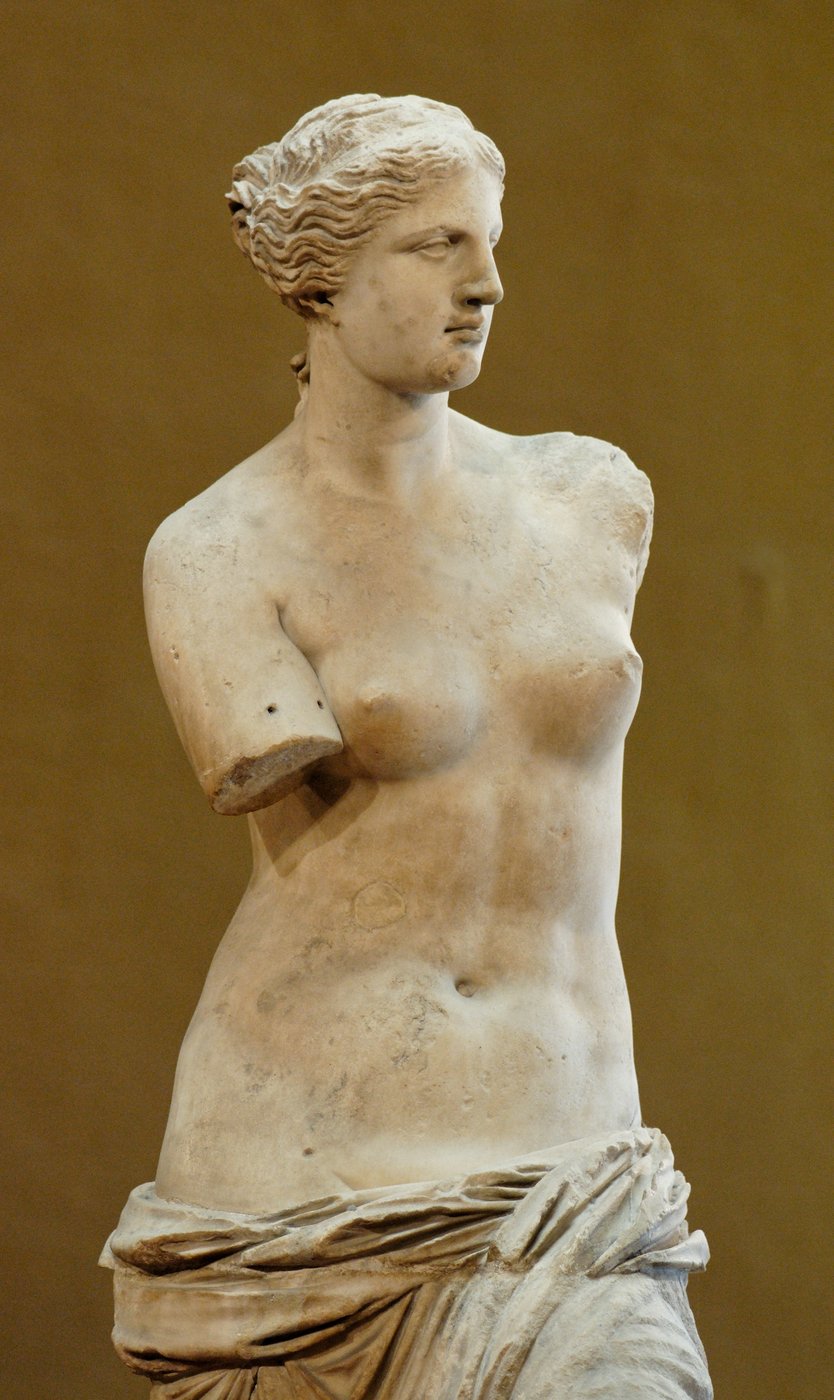
Key works
Works with a dedicated ArtAtlas page are highlighted in gold.
c. 130-100 BCE
The statue was found on the island of Milos in 1820 by local farmers digging on their land.