
Michelangelo — sculptures, biography and key works | Artatlas

Sculpture and Form

Michelangelo

Michelangelo Buonarroti (1475–1564) was the defining genius of the High Renaissance — sculptor of David and the Pietà, painter of the Sistine Chapel ceiling, and architect of St Peter's dome. He saw himself, above all, as a sculptor freeing figures from the marble.

1475–1564 · Renaissance sculptor and painter

He raised the artist from craftsman to divine creator — contemporaries already called him Il Divino, the Divine One.

Creator story

Surprising fact

Michelangelo painted the 500 m² Sistine ceiling over four years, mostly standing and craning backwards — not lying down, as legend claims — and wrote a poem about the agony it caused his neck and eyes.

Source: Wikipedia / Wikimedia
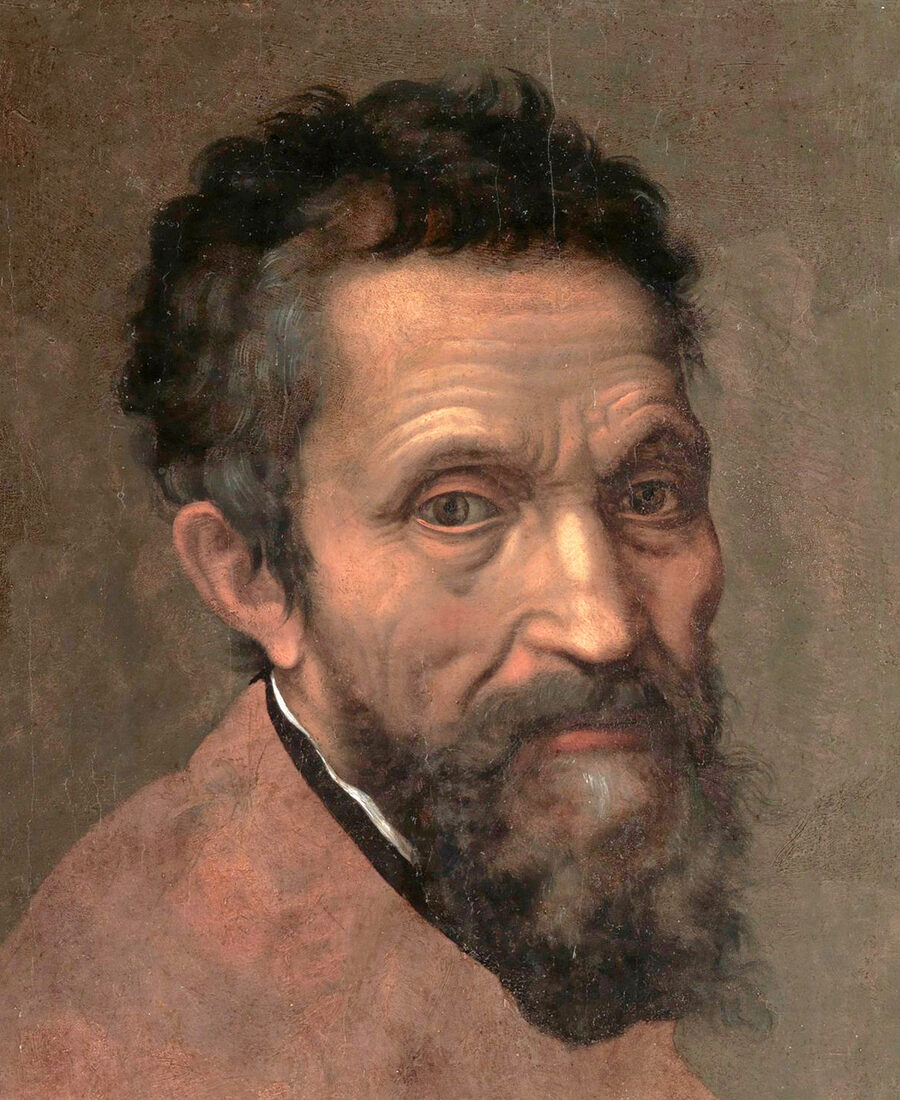
Portrait of Michelangelo
Portrait: Wikimedia Commons / Wikipedia.
  • Carved the 5-metre David from a single flawed marble block other sculptors had abandoned.
  • Painted the Sistine Chapel ceiling and Last Judgment though he insisted he was a sculptor, not a painter.
  • Designed the dome of St Peter's Basilica, shaping the Rome skyline to this day.
Michelangelo, The Creation of Adam

Key works

Three entry points into the world of Michelangelo

These works make it easiest to see how the artist changed form, content, and the very way art could exist in culture.

1511

The Creation of Adam

The Creation of Adam, also known as The Creation of Man, is a fresco painting by Italian artist Michelangelo, which forms part of the Sistine Chapel's ceiling, painted 1508–1512. It illustrates the Biblical creation narrative from the Book of Genesis in which God gives life to Adam, the first man.

1600

The Last Judgment

In The Last Judgment, Michelangelo makes the structure, scale, and logic of renaissance especially legible.

1500

David

David condenses the core ideas of sculpture and form into a memorable plastic form.

FAQ

Frequently asked questions

Quick answers to what people most often search about this artist.

When did Michelangelo live?

Michelangelo Buonarroti lived from 1475 to 1564: he was born at Caprese in Tuscany and died in Rome a few weeks short of his 89th birthday. His working life spanned almost the whole High Renaissance.

Why is Michelangelo famous?

Michelangelo made the human body the main language of art: anatomy and the twist of a figure carry the whole meaning. He worked as sculptor, painter and architect, and contemporaries already called him Il Divino, the Divine One.

What is Michelangelo's most famous work?

Most people name David — the marble figure over five metres tall, carved in the early 1500s and kept in the Galleria dell'Accademia in Florence. The Creation of Adam on the Sistine Chapel ceiling is just as recognisable.

Did Michelangelo sign his works?

The only work he ever signed is the Pietà in St Peter's, with his name cut into the band across the Virgin's chest. Vasari says he did it after overhearing the statue credited to another sculptor.