
Russian Romanticism

Ivan Aivazovsky

Ivan Aivazovsky was a Crimean Armenian who became the greatest marine painter in the history of art. Over his long career he painted roughly 6,000 canvases, but it was The Ninth Wave — a wrecked ship's survivors clinging to hope amid a raging, sunlit sea — that made his name a byword for seascape painting.

1817-1900 · Russian marine painter

Aivazovsky painted the sea so convincingly that contemporaries struggled to believe he worked without it in front of him — he painted entirely from memory, relying on an exceptional visual memory built over decades of watching the sea.

From the artist's life

According to sailors' folklore, the 'ninth wave' was believed to be the deadliest and highest wave of a storm; Aivazovsky turned this piece of maritime superstition into a universal symbol of courage in the face of nature.

Source: Wikipedia / Wikimedia
  • Painted roughly 6,000 canvases in his lifetime — an extraordinary output even by 19th-century standards.
  • Painted the sea entirely from memory, without working from life, relying on an exceptional visual memory.
  • The Ninth Wave became one of the most reproduced images in Russian painting.
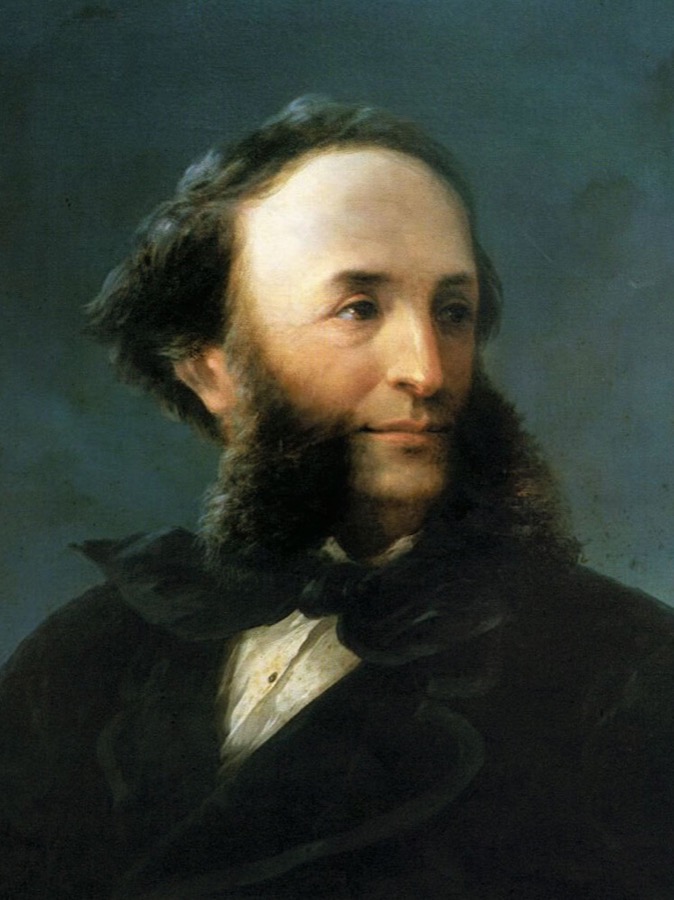
Portrait: Ivan Aivazovsky
Portrait: Wikimedia Commons / Wikipedia.

Key works

Where to start

Complete list of key works

Works with a dedicated ArtAtlas page are highlighted in gold.

List checked against Wikidata
  • The Ninth WaveOn ArtAtlas
  • Brig “Mercury” Attacked by Two Turkish ShipsListed for reference
  • The Black SeaListed for reference
  • RainbowListed for reference
  • A Moonlit Night on the BosphorusListed for reference
  • The Wrath of the SeasListed for reference
  • The Maiden's TowerListed for reference
  • Descent of Noah from AraratListed for reference
  • Theodosia. Moonlight nightListed for reference
  • Ship in a stormListed for reference

1850

The Ninth Wave

Aivazovsky painted the sea entirely from memory, without working from life, relying on an exceptional visual memory.