
From the artist's life
Rodin's lifelike first major figure, The Age of Bronze, was so realistic that critics accused him of casting it from a living model.
Source: Wikipedia / WikimediaSculpture and Form
Auguste Rodin (1840–1917) was the father of modern sculpture, who broke from polished academic tradition to model the human body with raw emotion and movement. The Thinker and The Kiss are among the most recognised sculptures in the world.
Rodin restored expressive power to sculpture and opened the door to modernism in three dimensions.
Rodin's lifelike first major figure, The Age of Bronze, was so realistic that critics accused him of casting it from a living model.
Source: Wikipedia / Wikimedia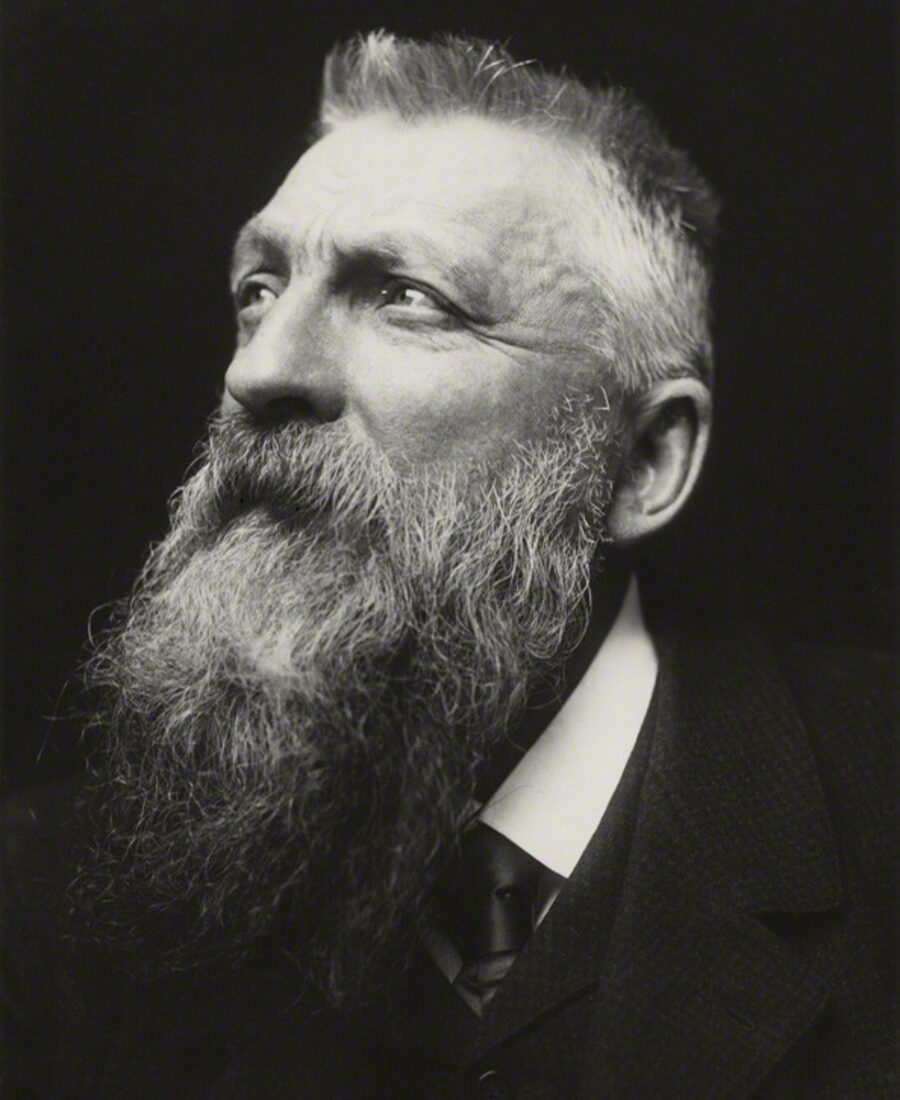

Key works
Works with a dedicated ArtAtlas page are highlighted in gold.
1888
Rodin originally wanted the sculpture placed directly on the ground — no pedestal at all — so the figures would stand at eye level with passersby on the street, which scandalized the Calais city council in 1895 and got overruled for decades.
1880
Rodin originally conceived The Kiss not as a standalone sculpture but as one of the condemned souls for his monumental Gates of Hell commission — the two figures were meant to be Paolo and Francesca da Rimini, caught in their sinful embrace just moments before Francesca's husband discovered them and killed them both.
1882
The Thinker, by Auguste Rodin, is a bronze sculpture depicting a nude male figure of heroic size, seated on a large rock, leaning forward, his right elbow placed upon his left thigh, with the back of his right hand supporting his chin in a posture evocative of deep thought and contemplation.