
From the artist's life
Charles V is said to have once bent down to pick up a brush Titian had dropped — an emperor serving a painter, a gesture unthinkable for the era.
Source: Wikipedia / WikimediaRenaissance
Titian (c. 1488–1576) was the towering master of the Venetian Renaissance, whose loose, glowing brushwork and saturated colour reshaped European painting for centuries. As court painter to Emperor Charles V and the Habsburgs, he set the model for the independent, celebrated artist.
From Rubens and Velázquez to Rembrandt and the Impressionists, painters learned colour and free handling from Titian; he is often called the father of modern painting.
Charles V is said to have once bent down to pick up a brush Titian had dropped — an emperor serving a painter, a gesture unthinkable for the era.
Source: Wikipedia / Wikimedia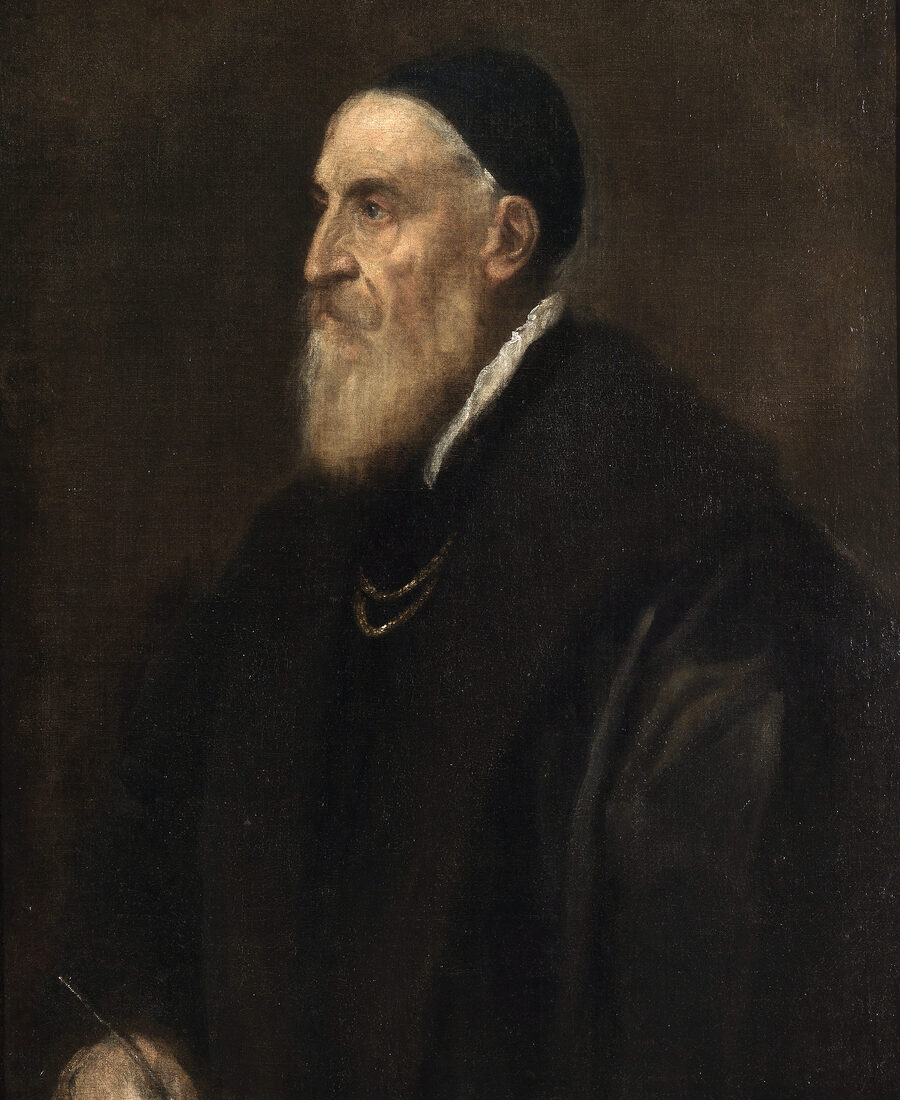

Key works
Works with a dedicated ArtAtlas page are highlighted in gold.
1538
The Venus of Urbino is an oil painting by Italian painter Titian, depicting a nude young woman, traditionally identified with the goddess Venus, reclining on a couch or bed in the sumptuous surroundings of a Renaissance palace.
FAQ
Quick answers to what people most often search about this artist.
Titian was born around 1488 in Venice and died in 1576. He became the leading master of the Venetian Renaissance and court painter to Emperor Charles V.
Among his most celebrated works is Venus of Urbino, a defining image of the reclining nude in Western painting.
He built form through colour and light rather than line — this Venetian approach was later adopted by Rubens, Velázquez and the Impressionists.
In his late works he painted almost with his fingers, achieving a loose, near-Impressionist brushwork three centuries before it became the norm.