
From the artist's life
Gauguin lived with Van Gogh in Arles for nine turbulent weeks that ended when Van Gogh, in crisis, cut off part of his own ear.
Source: Wikipedia / WikimediaPost-Impressionism
Paul Gauguin (1848–1903) abandoned a stockbroker's life for art, then Europe itself for the South Pacific. His bold, flat colour and search for a primitive paradise in Tahiti shaped Symbolism and modern art.
Gauguin's flat planes of colour and longing for the exotic deeply influenced the Fauves and Expressionists.
Gauguin lived with Van Gogh in Arles for nine turbulent weeks that ended when Van Gogh, in crisis, cut off part of his own ear.
Source: Wikipedia / Wikimedia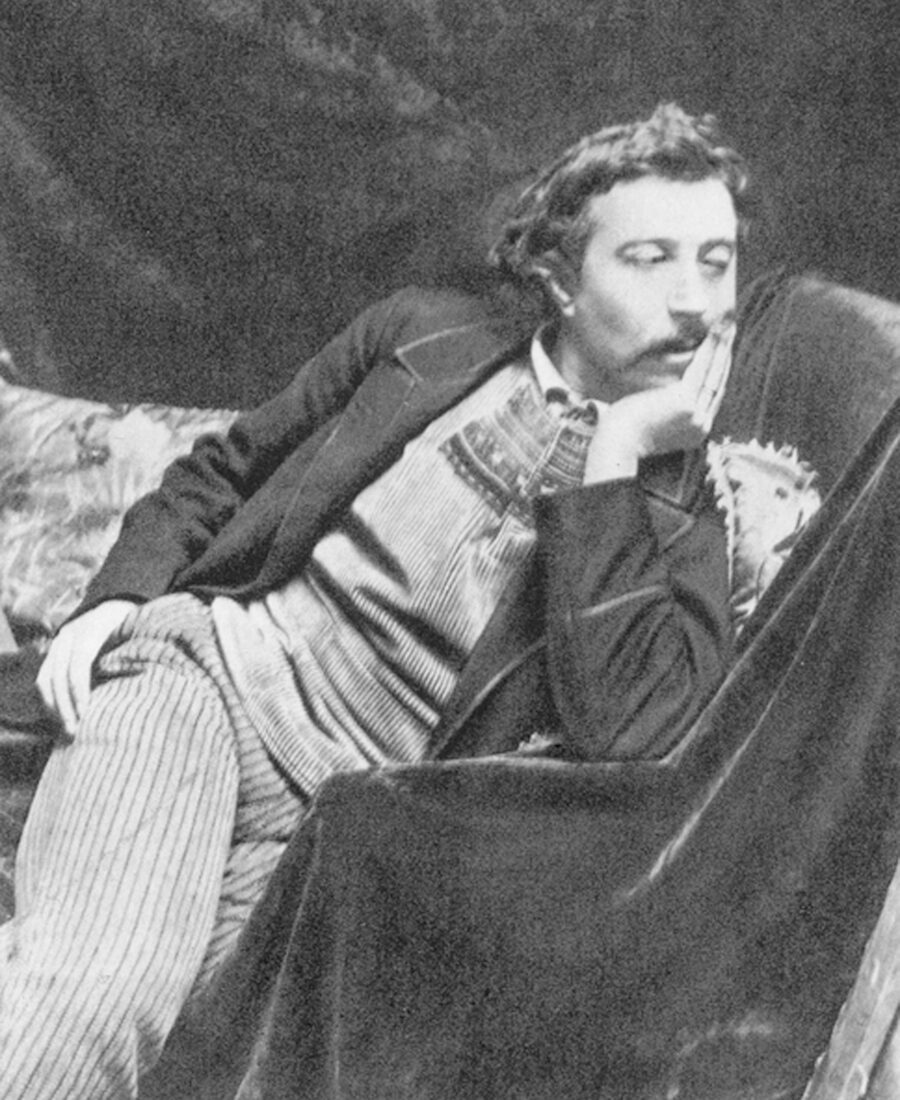

Key works
Works with a dedicated ArtAtlas page are highlighted in gold.
1888
Vision after the Sermon (Jacob Wrestling with the Angel) is an oil painting by French artist Paul Gauguin, completed in 1888. It is now in the Scottish National Gallery, Edinburgh. It depicts a scene from the Bible in which Jacob wrestles an angel.
1897
Where Do We Come From? What Are We? Where Are We Going? is an 1897–98 painting by French artist Paul Gauguin. The painting was created in Tahiti and is in the Museum of Fine Arts in Boston, Massachusetts. Viewed as a masterpiece by Gauguin, the painting is considered "a philosophical work comparable to the themes of the Gospels".