
From the artist's life
Rousseau painted lush tropical jungles without ever leaving France — he studied plants in Paris botanical gardens and the zoo.
Source: Wikipedia / WikimediaSymbolism
Henri Rousseau (1844–1910) was the self-taught naïve painter of dreamlike jungles and exotic beasts. A humble toll collector, he was mocked in his lifetime but adored by Picasso and the avant-garde.
Rousseau's bold, untrained vision helped legitimise naïve and outsider art within modernism.
Rousseau painted lush tropical jungles without ever leaving France — he studied plants in Paris botanical gardens and the zoo.
Source: Wikipedia / Wikimedia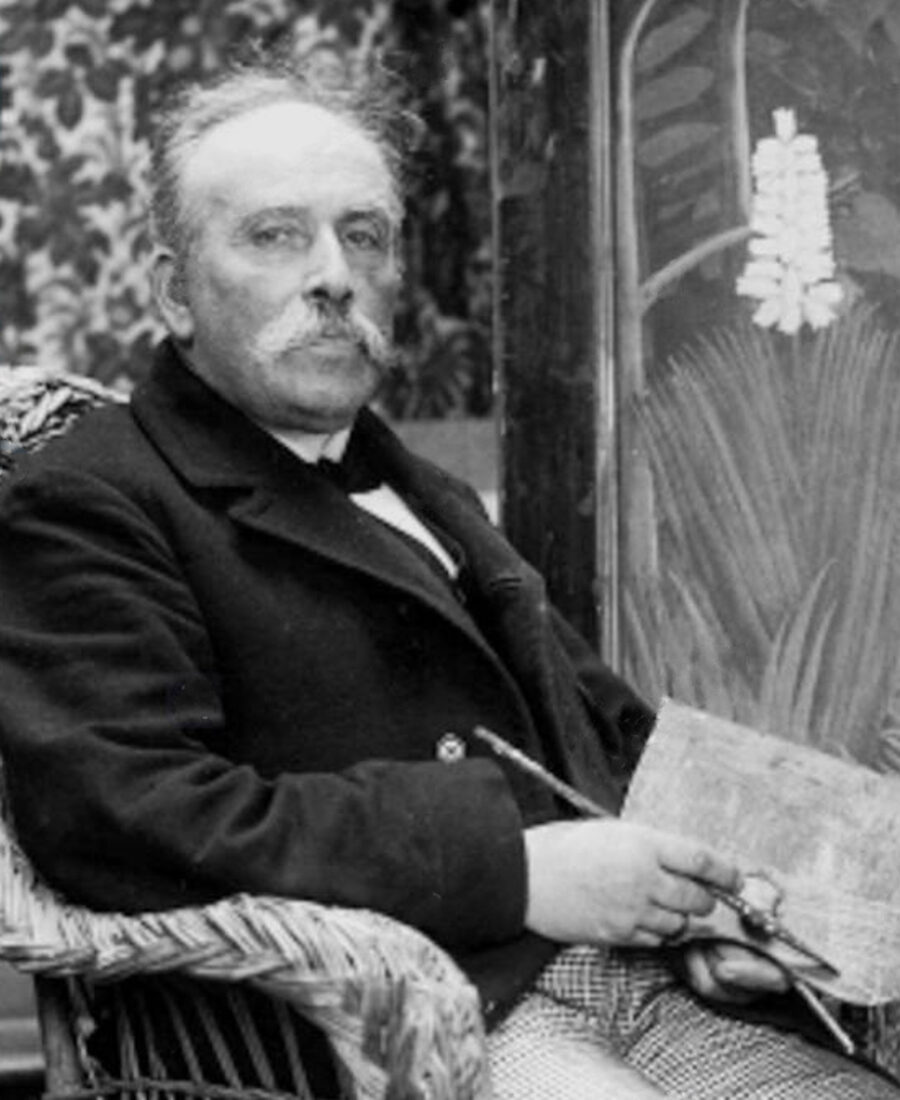

Key works
Works with a dedicated ArtAtlas page are highlighted in gold.
1910
1897
The Sleeping Gypsy is an 1897 oil on canvas painting by the French Naïve artist Henri Rousseau (1844–1910). It is a fantastical depiction of a lion musing over a sleeping woman on a moonlit night. It is held by the Museum of Modern Art in New York City, to which it was donated by Olga Guggenheim in 1939.