
From the artist's life
Degas's sculpture Little Dancer Aged Fourteen shocked viewers with its real tutu and hair — they called the realistic wax figure ugly and disturbing.
Source: Wikipedia / WikimediaImpressionism
Edgar Degas (1834–1917) was the painter of dancers, racehorses and modern Parisian life. Though counted among the Impressionists, he called himself a Realist devoted above all to drawing and movement.
His daring, off-centre compositions, influenced by photography and Japanese prints, redefined how a picture could be framed.
Degas's sculpture Little Dancer Aged Fourteen shocked viewers with its real tutu and hair — they called the realistic wax figure ugly and disturbing.
Source: Wikipedia / Wikimedia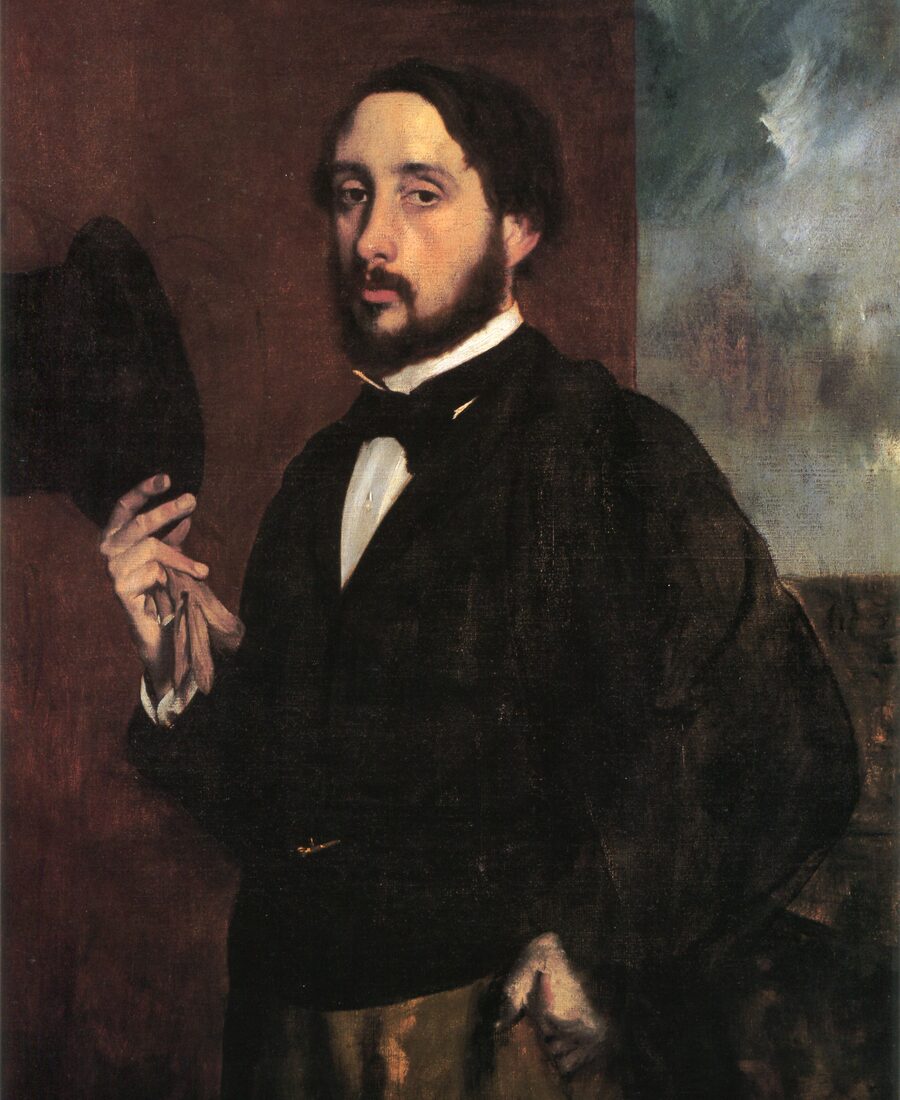

Key works
Works with a dedicated ArtAtlas page are highlighted in gold.
1875
L'Absinthe is a painting by Edgar Degas, painted between 1875 and 1876. Its original title was Dans un Café, a name often used today.
1871
1881
The Little Fourteen-Year-Old Dancer is a sculpture begun c. 1880 by Edgar Degas of a young student of the Paris Opera Ballet dance school, a Belgian named Marie van Goethem.