
From the artist's life
Dürer painted himself face-on in a Christ-like 1500 self-portrait — a bold claim for the artist as a god-given creator.
Source: Wikipedia / WikimediaRenaissance
Albrecht Dürer (1471–1528) was the genius of the German Renaissance and the greatest printmaker of his age. He fused Italian theory with Northern precision and raised the woodcut and engraving into high art.
Dürer's prints spread across Europe, making him the first truly international art celebrity and a model of the learned artist.
Dürer painted himself face-on in a Christ-like 1500 self-portrait — a bold claim for the artist as a god-given creator.
Source: Wikipedia / Wikimedia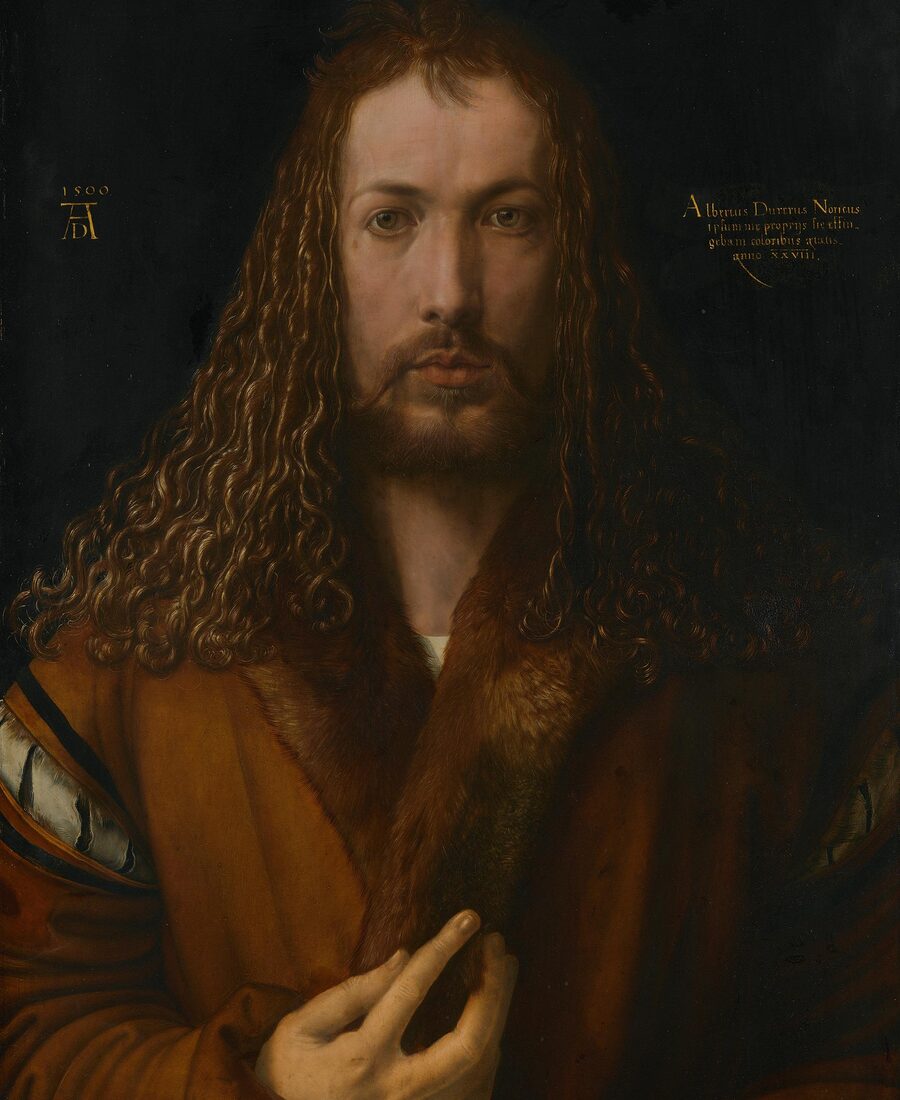

Key works
Works with a dedicated ArtAtlas page are highlighted in gold.
1507
Dürer created two large-scale painted versions of Adam and Eve in 1507 — one panel for each figure — making them the first monumental nudes in Northern European painting, which was genuinely shocking for audiences north of the Alps.
FAQ
Quick answers to what people most often search about this artist.
Albrecht Dürer was born in Nuremberg in 1471 and died in 1528. He became the leading artist of the German Renaissance and the greatest printmaker of his age.
He raised woodcut and engraving to the level of high art and fused Italian perspective theory with Northern precision of detail.
Key works include the 1504 engraving Adam and Eve and his 1500 self-portrait, in which he painted himself face-on like Christ.
By painting himself strictly face-on — a pose previously reserved for Christ — Dürer declared the artist a god-given creator rather than a mere craftsman.